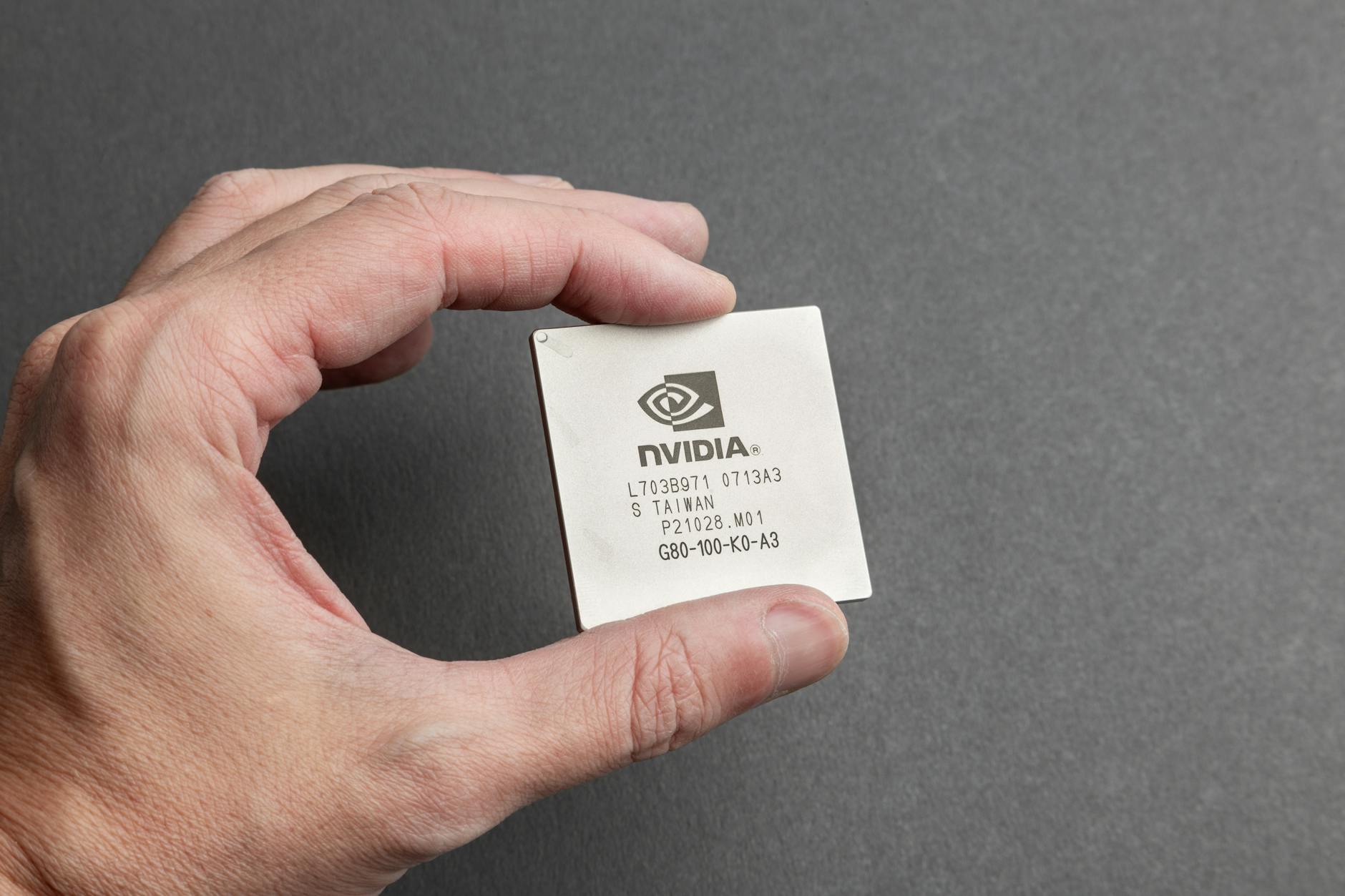
Google Unveils Custom Tensor Chips Amidst AI Rivalry
Google announced on April 22, 2026, the launch of its new custom tensor processing units (TPUs), specifically designed for accelerating large-scale artificial intelligence (AI) training and fueling the evolution of the AI agent economy. This strategic move aims to challenge Nvidia’s dominance in the AI hardware market by enhancing Google’s own data center capabilities, reducing operational latency, and decreasing dependence on third-party hardware, reported by Decrypt.
For the first time, Google is splitting its TPU offerings into two distinct lines: one focused on training AI models and the other tailored for inference tasks. The TPU 8t is engineered for demanding training processes, while the TPU 8i specializes in running AI models effectively in production environments. This division reflects an understanding of the shifting demands in AI, as companies increasingly seek specialized solutions to optimize performance.
Strategic Push to Compete with Nvidia
Google’s new generation of chips comes as tech giants like Amazon and Microsoft begin rolling out their own custom silicon, reflecting a broader trend in the industry where hyperscalers are investing in proprietary hardware to minimize reliance on established players like Nvidia. Although Google previously depended on Nvidia’s chips for substantial computational workloads, it now aims to position its TPU series as credible competitors in the AI space.
Despite Google’s advancements, none of the major tech firms have yet displaced Nvidia, which continues to dominate with its Graphics Processing Units (GPUs). Google has acknowledged that its TPU chips, while designed to be cost-effective and efficient for specific workloads, may struggle to match the raw computational power of Nvidia’s products in broader applications. As noted by analysts, the Tensor chips introduce a strategic flexibility that could cater to a diverse range of enterprise AI needs while representing a potential threat to Nvidia’s traditional market stronghold.
Google executives have emphasized that AI’s evolution demands specialized hardware to support increasingly sophisticated functionalities. “AI is evolving from answering questions to reasoning and taking action,” stated Amin Vahdat, Google’s senior vice president of AI and infrastructure, in a blog post accompanying the announcement. This shift suggests that the company is gearing up for an era where AI requires a level of intelligence beyond simple data processing, requiring hardware that can efficiently manage such complexities.
Potential Market Impact and Future Directions
Going forward, Google’s push into AI hardware may lead to significant shifts in the industry. As enterprises begin migrating their AI workloads from reliance on Nvidia’s systems to Google’s tailored solutions, the company anticipates bolstered demand for its platform within the cloud ecosystem. Moreover, the simultaneous offering of Nvidia’s Vera Rubin chip on Google Cloud later this year underscores the importance of maintaining a competitive edge while continuing to service existing customers reliant on Nvidia technology.
Analysts believe that as awareness of Google’s capabilities increases, enterprises might consider restructuring their AI architecture to leverage the cost-effective solutions presented by Google’s TPU lineup. The alignment of cutting-edge hardware with cloud services may signal a long-term trend toward optimized infrastructure in AI applications, potentially reshaping market dynamics.
As Google continues refining its TPU technology and enhancing its data centers, the broader implications of these developments could extend beyond competitor rivalry, potentially transforming how industries leverage AI across multiple sectors. Emerging fields such as autonomous systems and advanced data analysis may especially benefit from the customized approaches that Google is now pioneering.