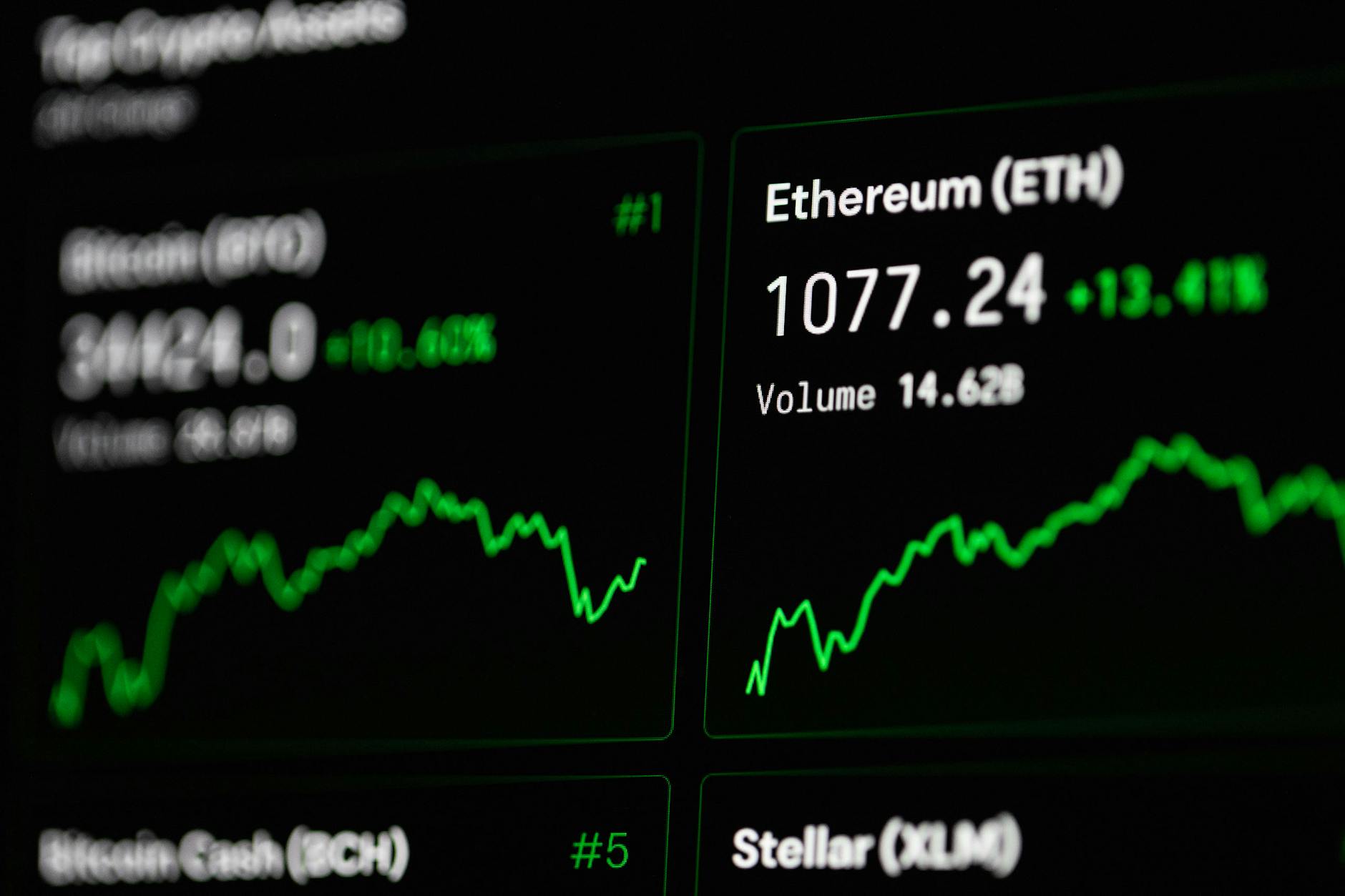
Moscow Exchange unveiled plans to launch index products tracking Solana (SOL), Ripple (XRP), Tron (TRX), and Binance Coin (BNB) beginning May 13, 2024, according to the exchange announcement. The move represents a significant deepening of Russia’s leading securities venue into cryptocurrency derivatives, extending institutional-grade trading infrastructure beyond its existing Bitcoin and Ethereum benchmarks.
The indexes will aggregate weighted pricing data from four major global cryptocurrency exchanges—Binance, Bybit, OKX, and Bitget—creating a standardized valuation framework for each asset class. Moscow Exchange positions the products as vehicles for both retail and institutional investors seeking regulated, transparent exposure to four of the cryptocurrency market’s most liquid altcoins without direct custody requirements.
Moscow Exchange’s Expanding Crypto Infrastructure
Russia’s primary bourse has accelerated its cryptocurrency offerings substantially over the past eighteen months, capitalizing on regulatory clarity within its borders and positioning itself as a derivatives hub amid Western financial sanctions. The May 13 launch follows Moscow Exchange’s earlier introduction of Bitcoin and Ethereum indexes, which established the technical and operational framework for broader digital asset product development.
Solana, Ripple’s XRP token, Tron, and Binance Coin each command significant trading volumes globally—collectively representing hundreds of billions in market capitalization. By structuring them as formal indexes rather than spot trading pairs, Moscow Exchange enables leveraged and derivative strategies while maintaining regulatory oversight.
Aggregation Methodology and Pricing Transparency
The weighted-price model draws from four tier-one cryptocurrency venues known for institutional-grade liquidity and settlement reliability. Binance, by market depth and trading volume, carries the heaviest weighting in the index calculations, with the secondary venues providing price discovery redundancy and reducing single-exchange manipulation risk. This multi-venue aggregation mirrors methodologies used by traditional index providers like MSCI and FTSE Russell.
Transparency around pricing sources carries particular importance for regulated financial products, especially in jurisdictions where securities regulators demand audit trails and conflict-of-interest disclosures. Moscow Exchange’s reliance on publicly available, real-time market data from established platforms signals institutional-grade compliance consciousness.
Russia’s Crypto Derivatives Boom Amid Sanctions Context
The Kremlin’s crypto-friendly regulatory posture has transformed Moscow Exchange into Europe’s largest venue for digital asset transactions, with volumes exceeding $376 billion annually. Tokenized real-world assets (RWAs) and cryptocurrency derivatives across the platform have reached $13 billion in outstanding notional value, with daily turnover climbing past $650 million—a tenfold increase from 2022 levels.
Western sanctions and restrictions on Russian financial institutions’ access to dollar clearing systems have inadvertently positioned digital assets as critical infrastructure for capital flows. Moscow Exchange capitalized on this structural dislocation by offering crypto derivatives that bypass traditional banking channels, attracting both domestic retail traders and institutional capital seeking sanctions-compliant execution venues.
Strategic Positioning Versus Western Competitors
American and European cryptocurrency derivatives platforms face regulatory constraints absent in Russia’s current framework, particularly regarding leverage ratios, position concentration limits, and algorithmic trading safeguards. The resurgence of altcoin trading interest has accelerated institutional demand for formalized pricing mechanisms—exactly the infrastructure Moscow Exchange now extends across SOL, XRP, TRX, and BNB markets.
The exchange hasn’t signaled when additional altcoins—Dogecoin and Cardano have drawn internal speculation—might receive index treatment. Market observers anticipate announcements within six months as platform operators gauge user demand and operational capacity.
Global Institutional Adoption Patterns and ETF Parallels
Moscow Exchange’s index rollout aligns with a broader international shift toward regulated cryptocurrency investment vehicles. The U.S. Securities and Exchange Commission’s 2024 approvals of spot Bitcoin and Ethereum ETFs, combined with cryptocurrency futures trading on the Chicago Mercantile Exchange, have legitimized digital assets within traditional institutional portfolios. Index-based products accelerate this trend by offering standardized exposure metrics comparable to equity indexes.
Market volatility in altcoin pricing underscores why aggregated indexes matter—they smooth single-exchange distortions and provide stable benchmarking for risk management calculations. Asset managers building crypto allocations increasingly demand index-based infrastructure to justify holdings to compliance committees and fiduciary oversight bodies.
India’s Regulatory Monitoring and Cross-Border Arbitrage Considerations
Indian financial regulators and asset managers have begun monitoring Moscow Exchange’s cryptocurrency product suite with particular attention to pricing methodologies and hedging structures. The Reserve Bank of India maintains restrictions on direct cryptocurrency trading within Indian borders, yet Indian institutional investors and high-net-worth individuals actively access international derivatives venues through legal loopholes and offshore structures.
Cross-border arbitrage opportunities—price discrepancies between Moscow Exchange indexes and spot prices on global venues—may attract Indian algorithmic trading firms and quantitative hedge funds seeking regulatory-adjacent exposure. The Reserve Bank’s ongoing cryptocurrency task force deliberations include examining whether Indian exchanges should develop similar index-based frameworks to prevent capital flight toward international platforms.
Precedent exists: when global cryptocurrency ETF approvals accelerated, Indian asset managers rapidly developed workaround structures for clients seeking digital asset exposure, even under regulatory constraints. Moscow Exchange’s formalized indexing may catalyze Indian regulatory discussions about managed, indexed cryptocurrency products as a compromise between blanket prohibitions and unrestricted spot trading.
Technical Infrastructure and Settlement Mechanics
The May 13 launch requires Moscow Exchange to establish real-time data feeds from Binance, Bybit, OKX, and Bitget—necessitating API integrations, backup connectivity, and redundancy protocols. Settlement finality for index-based derivatives typically occurs within 24 hours on traditional equity exchanges; cryptocurrency venues often settle same-day or within hours.
Price discovery timing becomes critical when aggregating across geographically dispersed venues operating across multiple time zones. Moscow Exchange’s technical specifications, once disclosed, will reveal whether the index calculation runs on UTC timestamps, Moscow time, or a rolling window that captures peak liquidity hours across Asian, European, and American trading sessions.
Regulatory Implications and Long-Term Market Structure
Russia’s willingness to formalize altcoin derivatives contrasts sharply with regulatory postures in the European Union, where MiCA (Markets in Crypto-Assets) regulations impose capital requirements and position limits designed to manage retail investor risk. Moscow Exchange operates with fewer constraints, enabling product innovation that may prove temporary if geopolitical conditions shift or Western pressure on Russian financial infrastructure intensifies.
The index launches also signal confidence in SOL, XRP, TRX, and BNB’s long-term viability within Moscow Exchange’s strategic framework. Unlike speculative pump-and-dump altcoins, these four tokens command substantive developer ecosystems, institutional backing, and multi-year operational histories—reducing regulatory risk if authorities eventually demand token-by-token vetting.
Price movements in these altcoins will now correlate tightly with Moscow Exchange index performance, as derivatives traders reference the published benchmarks for mark-to-market calculations and margin calls. This feedback loop may increase or dampen volatility depending on whether index-based traders crowd into correlated positions or provide counter-liquidity.