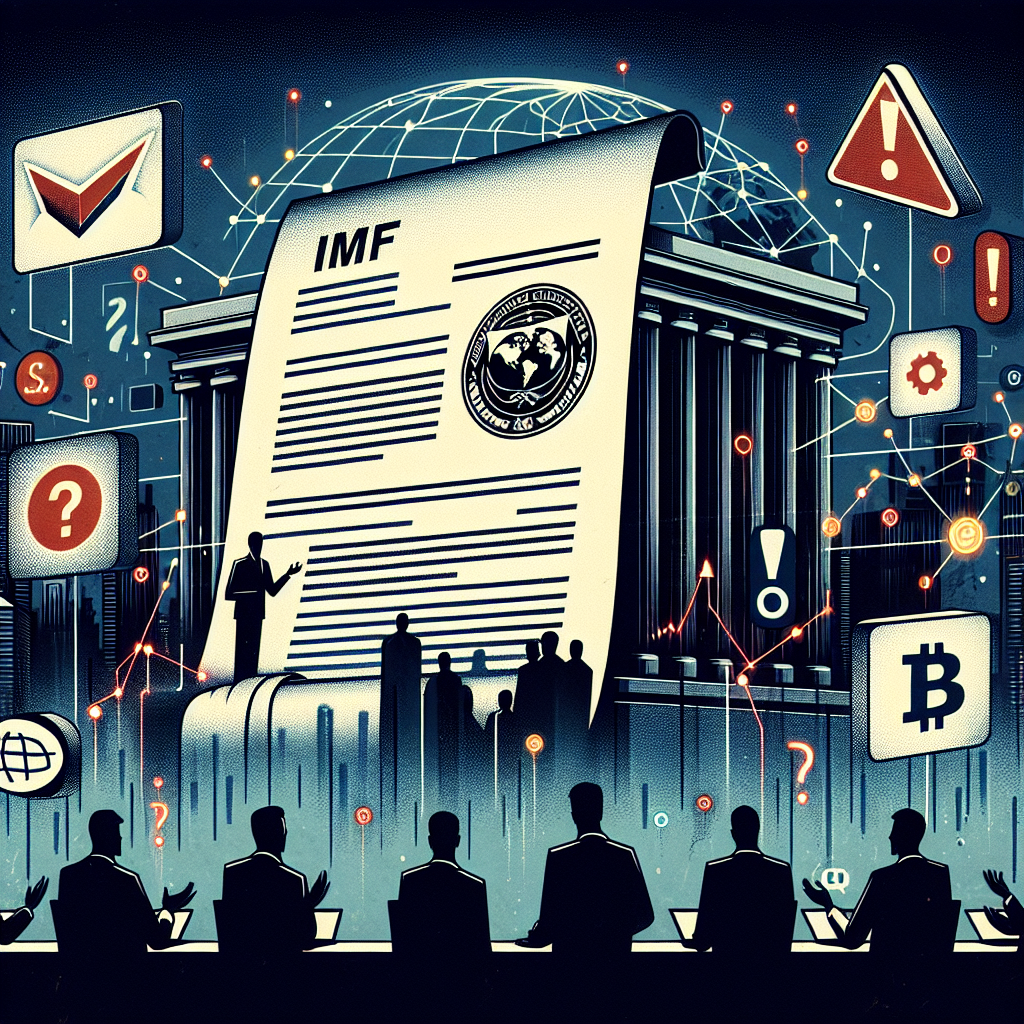
The International Monetary Fund (IMF) released a new report warning that stablecoins could pose risks to global financial systems. The report, issued today, raises concerns about the rapid growth of these digital assets and their potential to cause disruptions if not properly regulated.
This development comes as regulators and policymakers worldwide continue to assess how stablecoins impact markets and economies. With digital currencies expanding quickly, the IMF’s warning is expected to shape upcoming regulatory decisions in multiple countries.
Key findings from the report
The IMF report states that:
- Stablecoins can create financial vulnerabilities, especially in emerging markets.
- They could lead to currency substitution, reducing the effectiveness of local monetary policy.
- Lack of transparency in reserves increases the risk of instability.
The report calls for stricter rules and improved oversight. It says that global coordination is needed to manage the risks tied to stablecoins.
Stablecoins are digital tokens designed to maintain a stable value, often linked to fiat money such as the U.S. dollar. Some are widely used in crypto trading and cross-border payments due to their price stability. However, the IMF’s report suggests that without strong oversight, these assets could affect national currencies and create dangers during market crises.
This matters now because many governments are exploring or launching their own digital currencies. The balance between innovation and risk has become a key topic in economic forums like the G20 and the World Bank meetings.
Response from experts
Finance and tech experts reacted quickly. Some critics argue the report overlooks the benefits of stablecoins, such as faster transactions and financial inclusion. Others agree that the current lack of regulation remains a serious concern.
“The IMF is right to flag the risks, but we also need to discuss stablecoins’ potential to support underserved financial sectors,” said a blockchain researcher at the University of London.
Market and regulatory impact
Following the report, prices of some stablecoins remained steady, but investor sentiment was cautious. Several regulatory bodies, including the European Central Bank and the U.S. Treasury, have recently proposed new rules for stablecoins, reflecting growing concerns about their use in the economy.
The IMF report may pressure lawmakers to act more quickly. Countries like Japan, Canada, and India are already working on stablecoin-specific laws. The IMF’s recommendations could influence the final form of these regulations.
Background on stablecoins
Stablecoins were first introduced to reduce volatility in digital asset markets. Tether (USDT), USD Coin (USDC), and Dai (DAI) are among the most well-known. Their combined market cap exceeds $130 billion as of 2024. Many are tied to the U.S. dollar and used frequently in crypto trading.
Recent developments
- In May 2024, the European Union passed new requirements for stablecoin issuers under its MiCA framework.
- The U.S. House of Representatives is reviewing a stablecoin bill focused on reserve transparency and audit rules.
- G7 countries recently called for coordinated action on global crypto asset regulation, including stablecoins.
Sources:
- International Monetary Fund – “Global Financial Stability Report,” June 2024
- World Economic Forum – “Digital Currencies and Financial Security,” May 2024
- Reuters – “IMF Sounds Alarm on Stablecoins,” June 5, 2024