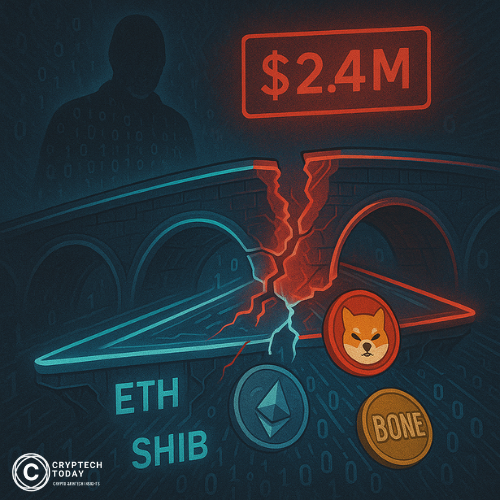
In one of the most dramatic moments of the year for the Shiba Inu ecosystem, the Shibarium hack on September 13, 2025, sent shockwaves across the crypto world. Attackers pulled off a $2.4 million exploit on Shiba Inu’s Layer-2 blockchain, targeting its bridge and gaining validator control. What unfolded next was both a crisis and a strange market phenomenon. Instead of crashing, Shibarium’s key tokens, including BONE and SHIB, staged a surprising rally. According to on-chain data, this exploit is one of the largest validator attacks in recent months and highlights the ongoing security challenges faced by DeFi networks.
The Attack: How Hackers Took Control of Validators
The Shibarium hack was not a simple exploit; it was a meticulously planned flash loan attack. The hacker borrowed 4.6 million BONE tokens, which are crucial for network governance, and managed to gain access to 10 of the 12 validator keys. This level of control essentially gave them power over Shibarium’s consensus process, allowing them to authorise malicious transactions. The main target was the Shibarium bridge, which connects Ethereum to Shibarium’s network.
With validator control secured, the attacker drained 224.57 ETH, a staggering 92.6 billion SHIB tokens, and approximately $700,000 worth of KNINE tokens from the DeFi platform K9 Finance.
Emergency Response and Damage Control
Within hours of the Shibarium hack, developers scrambled to contain the damage. Staking and unstaking of BONE were frozen to stop the attacker from cashing out borrowed tokens. Validator funds were moved to a hardware-secured 6-of-9 multisignature wallet, adding a layer of protection against further compromise.
To investigate the breach, the team brought in security firms Hexens, Seal 911, and Law enforcement agencies were contacted, but the developers also made it clear that they were open to negotiating with the attacker, a move that shows how common “white hat” style negotiations have become in DeFi exploits.
Meanwhile, K9 Finance DAO blacklisted the hacker’s wallet, making it harder to liquidate the stolen KNINE tokens. They also announced a $23,000 bounty (5 ETH) for the safe return of the funds, with a 30-day response window and gradually decreasing rewards after the first week.
Market Reaction: BONE and SHIB Rally
In a twist that caught traders off guard, the Shibarium hack triggered a price rally instead of a collapse. BONE surged nearly 78% within an hour, reaching a peak of $0.294 before settling around $0.202, still up over 41% on the day. SHIB also saw a 4.5% jump before later retracing by about 5% as risk sentiment cooled.
Analysts believe the sudden freeze on BONE staking reduced available supply and may have triggered speculative buying. Whale wallets also appeared active during the rally, adding to the volatility. The market’s reaction suggests that investors may have seen the hack as a temporary setback rather than a fatal blow to the network.
The Shibarium hack marks the second major exploit for the network in 2025, following a $3.1 million incident earlier this year. These repeated attacks shine a light on the vulnerabilities of cross-chain bridges, often referred to as the Achilles’ heel of DeFi.
Blockchain Forensics
The aftermath of the Shibarium hack also highlights the growing importance of blockchain forensics in crypto security. Just as recent hacks on exchanges like Phemex, Bybit, and BingX were unravelled through chain analysis, investigators are now tracing the stolen Shibarium funds across multiple wallets to track the exploiter’s movements. Platforms like CoinSpector provide investigators with real-time insights into wallet clusters, laundering patterns, and cross-chain swaps. By monitoring suspicious wallet behaviour, they can alert exchanges and even freeze stolen funds before they are cashed out.
In an ecosystem where hackers often use mixers, cross-chain swaps, and peeling transactions to hide their tracks, these investigative tools are essential in protecting investors and holding attackers accountable. The Shibarium community now waits to see whether this case will become another success story where blockchain forensics helps recover stolen funds or a reminder that DeFi still has a long way to go in securing its infrastructure.