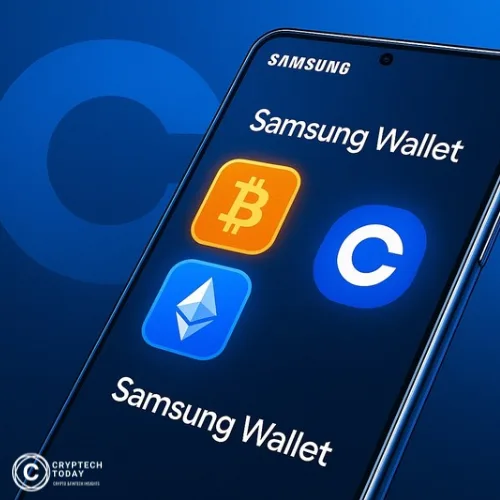
Samsung and Coinbase have joined forces in what analysts are calling the most ambitious mainstream crypto integration yet. On October 3, 2025, the companies rolled out a seamless Coinbase Samsung Wallet integration, instantly giving 75 million U.S. Galaxy users the ability to trade, stake, and store cryptocurrencies directly from their smartphones.
While crypto integrations in mobile wallets are not new, the scale and depth of this partnership represent a turning point in digital finance bridging the gap between traditional payments and decentralised asset management.
Partnership Overview
Scope and Reach: The Samsung–Coinbase partnership covers over 75 million Galaxy users in the United States in its first phase. Samsung’s broader ecosystem of more than one billion devices worldwide sets the stage for a potential global rollout over the next year.
Integration Path: The partnership builds on an earlier July 2025 pilot, which enabled users to link Samsung Pay to Coinbase accounts for direct crypto purchases. The latest update takes it further embedding Coinbase natively into the Samsung Wallet, allowing in-wallet trading, staking, and portfolio management.
Key Features and Benefits
1. Unified Crypto Access
Users can now buy, sell, and manage cryptocurrencies without ever leaving the Samsung Wallet interface. This unifies crypto with existing features like payment cards, IDs, and digital passes turning Samsung Wallet into a true all-in-one finance hub.
2. Free Coinbase One Membership
All Galaxy users in the U.S. receive a three-month complimentary Coinbase One subscription (worth $29.99/month), offering:
- Zero trading fees on eligible assets up to $10,000/month
- Priority customer support and dedicated protection
- Enhanced staking yields
- Account protection up to $1 million against unauthorised access
Users who complete their first trade also receive a $25 credit, encouraging quick adoption.
3. Samsung Pay Integration
Users can fund Coinbase wallets directly using Samsung Pay, merging fiat and crypto rails. They can also use crypto holdings for payments wherever Samsung Pay is accepted.
4. Security Infrastructure
Samsung’s Knox security framework underpins the entire integration. Transactions are safeguarded with biometric authentication, hardware-based encryption, and tokenised storage, setting a new standard for smartphone-level crypto security.
The Global Expansion Roadmap
The companies plan to expand beyond the U.S. in 2026, targeting markets in Europe, India, and South Korea regions where Samsung dominates smartphone market share. The Coinbase Samsung integration is part of Coinbase’s broader goal to bring “a billion people on chain” by embedding crypto within familiar consumer experiences.
For Samsung, it represents its largest blockchain initiative to date, positioning the company as the first major smartphone manufacturer to make crypto access native to its ecosystem.
Competitive Context: Apple and Google’s Position
Samsung’s move places pressure on its biggest rivals Apple and Google who have thus far treaded cautiously in direct crypto integration.
- Apple Pay currently supports third-party fintech apps but has not partnered directly with any crypto exchange. However, Apple has quietly filed multiple blockchain and wallet patents, signalling long-term interest in tokenised assets.
- Google Pay, on the other hand, already partners with Coinbase and Bakkt for crypto-linked payments in the U.S. and has launched limited Bitcoin custody trials with select banking partners.
Author’s Thoughts:
This shift suggests an inevitable convergence between tech giants and digital assets. Google Pay’s early partnerships and Apple’s ecosystem control make them likely candidates for future crypto wallet integrations. As consumer payments move toward programmable, tokenised assets, tech companies will compete to become the default gateway to digital finance.
Samsung’s partnership merely opened the door first but the race for Web3-native finance dominance has now officially begun.
Digital Finance Convergence
The Coinbase integration isn’t just about convenience it’s about changing how financial infrastructure works.
Traditionally, users accessed crypto via standalone apps or exchanges. Samsung’s model flips that: crypto is now embedded directly into the smartphone layer, similar to how digital payments and IDs became native features.
This integration brings:
- Mainstream adoption momentum, as crypto access merges with daily-use devices.
- Trust through familiar ecosystems, reducing the fear barrier for first-time users.
- Economic inclusion, giving unbanked users new entry points into decentralised finance.
The result? Smartphones are no longer just communication tools — they’re evolving into portable financial super apps.
Broader Industry Impact
For Coinbase, this partnership solidifies its role as the infrastructure provider for mobile-native crypto access. It shifts the company’s growth from exchange users to embedded wallet users a higher-retention, lower-friction model.
For Samsung, it enhances brand differentiation. In an increasingly competitive smartphone market, offering native crypto functionality could drive adoption among younger, tech-savvy demographics.
And for the broader ecosystem, it sets a precedent: digital asset access is becoming a default feature of consumer tech, not a niche add-on.
Author’s Final Take
The Samsung–Coinbase integration represents the beginning of a new financial architecture one where smartphones, wallets, and exchanges merge into seamless digital ecosystems.
Today, Samsung is leading. But tomorrow, Apple Pay will likely partner with an exchange, and Google Pay’s crypto tie-ins will expand globally. These companies already handle billions in daily transactions; embedding crypto rails is the logical next step.
In this emerging paradigm, digital payments and blockchain finance are no longer separate. Whether buying coffee, transferring stablecoins, or staking ETH, the same app maybe even the same button will soon handle it all.
The partnership between Samsung and Coinbase isn’t just a tech story it’s the prototype of the future financial interface, where decentralisation, consumer convenience, and big tech finally meet.