
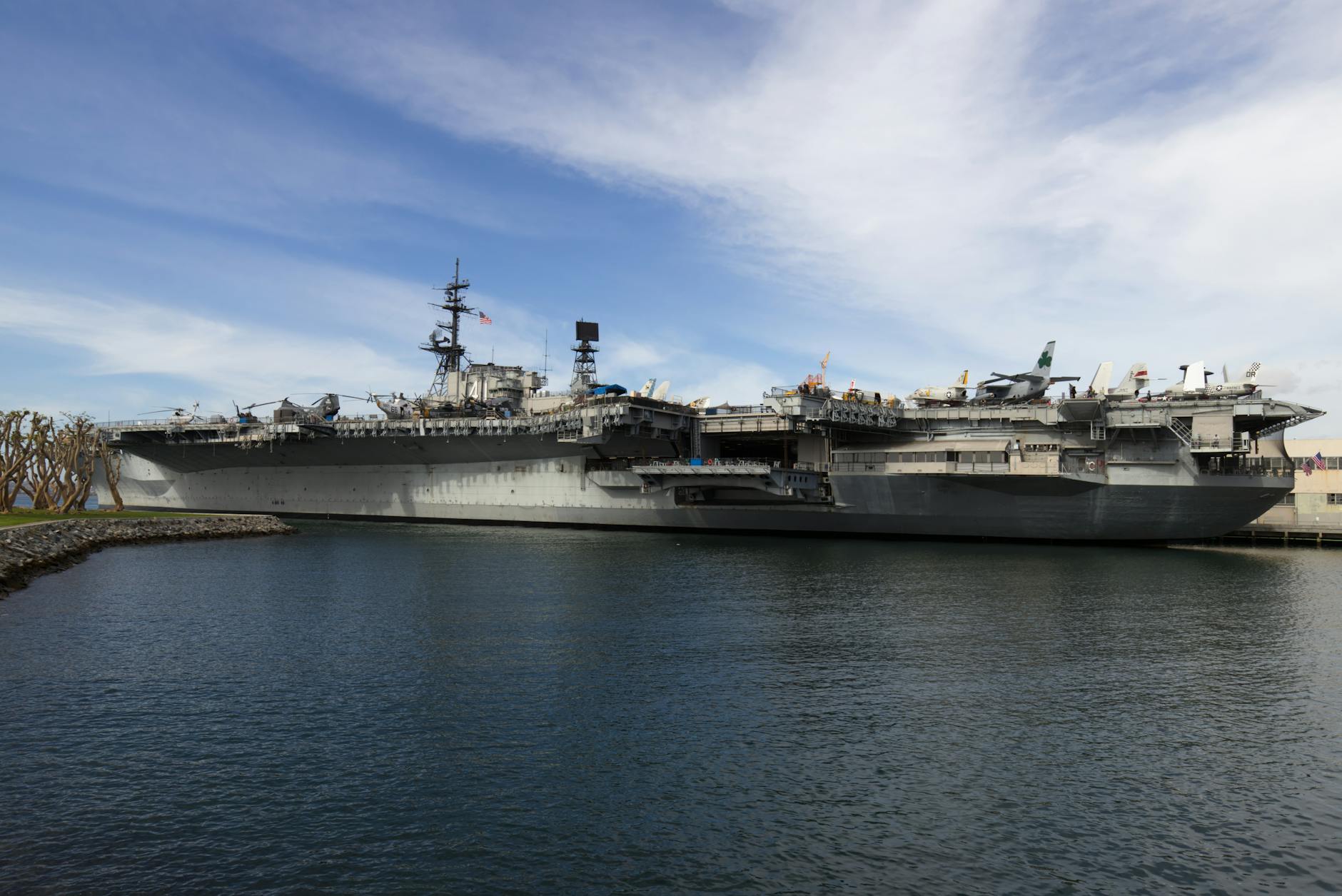
US Navy Blockade of Iran Enforces New Oil Market Dynamics
President Donald Trump announced the implementation of a naval blockade of Iranian ports on April 13, 2026, aimed at ending Tehran’s purported “extortion” tactics within global markets. This decisive action led to an immediate surge in oil prices, with Brent crude exceeding $103 a barrel and West Texas Intermediate (WTI) surpassing $104.
The blockade comes after a series of unsuccessful ceasefire talks with Iran, demonstrating a significant shift in the US approach toward Tehran. Analysts indicate that this move could considerably tighten global supply, fostering further price increases across commodities—particularly oil—leading to heightened inflationary pressures on consumers.
Market Reaction to the Blockade Announcement
The oil market responded quickly to the blockade news, with prices skyrocketing overnight. Experts suggest that prices could rise an additional $10 per barrel, nearing levels last seen when geopolitical tensions were particularly strained. Jay Hatfield, CEO of Infrastructure Capital Advisors, noted, “The market’s response to Trump’s blockade threat was instantaneous, indicating strong investor sensitivity to supply disruptions.”
This escalation in prices creates a ripple effect as concerns mount regarding inflation. With oil being a crucial input for various sectors, increased crude prices are expected to elevate gasoline costs and household expenses for everyday consumers.
The blockade has underscored the volatility inherent in oil markets, which are intertwined with geopolitical maneuvering. After peaking at $119 last month, Brent crude had seen a temporary decline below $92 prior to the blockade announcement. This fluctuation reflects the broader uncertainty that continues to grip the market, which has seen optimistic hopes for peace negotiations dashed.
Future Implications for US-Iran Relations and the Global Economy
Going forward, analysts expect that the blockade will intensify geopolitical tensions, affecting the broader relationship between the US and Iran in ways that could lead to further retaliatory actions or diplomatic standoffs. As the US enforces the blockade, its effectiveness will come under scrutiny, especially concerning how it can balance operations in the strategically significant Strait of Hormuz, a vital passageway for oil shipments.
Financial markets, particularly in Asia, have opened lower in reaction to the blockade, showing signs of heightened caution as investors weigh the long-term implications for oil prices and inflation. The U.S. Central Command has stated that the blockade will be enforced impartially, affecting only Iranian vessels, which further shapes the operational landscape for maritime traffic in the region.
Ultimately, as consumers brace for potential increases in fuel costs, broader inflationary scenarios may unfold. Analysts warn this could tighten household budgets, particularly in a market already grappling with uncertainty following previous economic disruptions.








