When Japan’s SBI Crypto reported a $21 million theft in late September 2025, it appeared at first glance to be another headline-grabbing crypto hack. But forensic analysis quickly revealed something more alarming. This wasn’t a random intrusion. It bore the hallmarks of state-sponsored cybercrime, fitting the patterns of North Korea’s Lazarus Group, whose blockchain laundering networks have become one of the most sophisticated financial crime operations in the world.
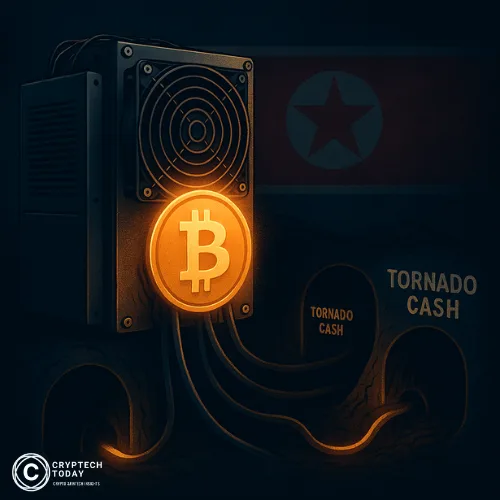
According to CryptoSlate, attackers drained wallets across five blockchains: Bitcoin, Ethereum, Litecoin, Dogecoin, and Bitcoin Cash with surgical precision. Investigators found coordinated movements between hot wallets, instant exchanges, and the privacy protocol Tornado Cash, routing stolen coins within hours of extraction. Blockchain researcher ZachXBT identified that this was no smash-and-grab; it was an orchestrated strike exploiting mining infrastructure, not trading accounts.
The hack came just as SBI Group was preparing to launch its Bitcoin and XRP ETFs, a coincidence that some analysts interpret as strategic timing. By hitting a major institution during a regulatory milestone, the attackers not only siphoned funds but also sowed uncertainty in Japan’s crypto-financial ecosystem.
Mining Pool: The New Attack Frontier
Unlike traditional exchanges that primarily hold user deposits, mining pools handle continuous reward inflows and payouts, a steady stream of liquidity stored in hot wallets that must remain online to function. SBI Crypto, Japan’s 12th-largest Bitcoin mining pool, controls around 20 EH/s of hash power and processes large daily rewards across multiple blockchains.
This operational setup creates what cybersecurity experts call “necessary exposure” hot wallets that are impossible to fully isolate without halting operations. A 2024 research study found that mining operations face breach risks up to five times higher than cold-storage custodians, precisely because their funds must remain live.
Most pools lack the layered defences of large exchanges. Many use basic multi-signature schemes without distributing signing keys geographically or creating hardened recovery procedures. That leaves single points of failure; one compromised admin key, outdated firmware, or insider credentials can expose millions in operational liquidity.
North Korea’s New Laundering Playbook
The SBI incident aligns almost perfectly with North Korea’s evolving laundering architecture. Groups like Lazarus, long associated with major exploits like the $620 million Ronin Network breach and the $100 million Horizon Bridge theft, are now focusing on mining-related targets. Mining pool represent both liquidity hubs and regulatory blind spots: less oversight than exchanges, more cash flow than retail wallets.
Analysts at TRM Labs describe a clear pattern: rapid, automated fund dispersal through instant exchanges, followed by obfuscation via Tornado Cash, a decentralised mixing protocol sanctioned by the U.S. Treasury in 2022. Despite sanctions, Elliptic reports that the mixer has processed over $7 billion in laundered crypto, including $455 million from Lazarus-linked addresses.
This technique, sometimes called “flood-and-fade”, overwhelms compliance systems by executing hundreds of microtransactions in quick succession, splitting assets across multiple chains and privacy layers before compliance teams can react. Once funds enter Tornado Cash, tracing requires cross-chain forensics, often involving machine learning pattern recognition and probabilistic clustering tools that even top exchanges struggle to deploy in real time.
Crypto Laundering as a Sanctions Strategy
For North Korea, crypto theft isn’t just economic opportunism; it’s statecraft. Digital assets fund weapons development and sustain sanctioned programs. According to Chainalysis, Pyongyang now operates a vast network of IT workers and front companies across Asia and the Middle East, using fake identities to infiltrate tech firms and earn crypto salaries later funnelled through laundering pipelines.
U.S. Department of Justice filings show over 250 shell companies linked to DPRK cyber operations, spread across China, Russia, and the UAE. These networks coordinate laundering through mixers, over-the-counter brokers, and mining-based exchanges, an ecosystem that blurs the line between hacking and state-backed revenue generation.
The SBI case underscores how mining infrastructure has become part of that geopolitical battlefield. Unlike exchanges or DeFi protocols that can quickly patch vulnerabilities, mining pool are persistent targets: they handle predictable rewards, rely on constant online liquidity, and often fall outside financial licensing frameworks.
Can the Industry Defend Itself?
Mitigating these risks demands enterprise-grade security, a step many mining operations still resist due to cost and complexity. Experts recommend multi-signature wallets with 3-of-5 or 4-of-7 key schemes, hardware security modules (HSMs), and geographically distributed signers to prevent localised compromise. Cold storage segregation remains essential: no more than 5% of funds should sit in hot wallets at any given time.
Regular audits, network segmentation, and access reviews can drastically reduce exposure. Mining firms should also adopt behavioural monitoring, tracking transaction timing, velocity, and counterparties using tools from Chainalysis, Elliptic, or TRM Labs to identify laundering patterns before funds vanish.
Beyond technology, compliance is crucial. Implementing Know Your Customer (KYC) for large miners, monitoring payouts for links to sanctioned jurisdictions, and maintaining full transaction records are becoming best practices in this grey area between infrastructure management and financial service provision.
A Wake-Up Call for Mining Infrastructure
The SBI Crypto hack is more than a cautionary tale; it’s a sign of where crypto crime is heading. Nation-state groups are no longer targeting retail exchanges or DeFi startups; they’re focusing on the core operational layers of blockchain itself. Mining pool, validator nodes, and cross-chain bridges now represent high-value choke points in the global crypto economy.
As the industry matures, security must scale alongside hash power. Without hardened defences, mining pools risk becoming the next weak link in a geopolitical tug-of-war that extends from Pyongyang to Palo Alto. The choice for operators is stark: invest in resilience now or risk becoming the next funding source for a nation’s cyberwarfare ambitions.