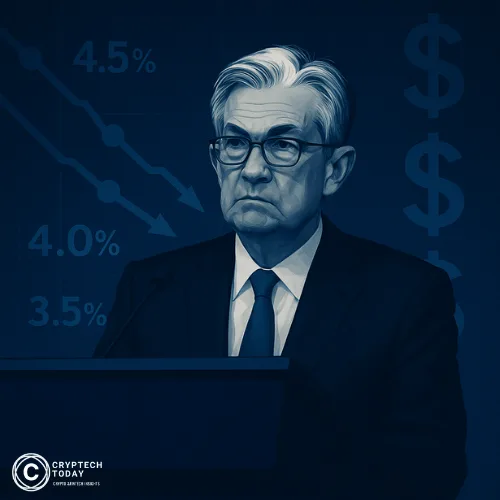
The Federal Reserve’s October 2025 meeting is widely expected to end with a modest but symbolically important 0.25% rate cut, lowering the federal funds rate to a target range of 3.75%–4.00%. It will be the Fed’s second cut of the year and arguably its most telegraphed one. With Fed funds futures pricing in more than 99% probability of a quarter-point move, the market’s real focus isn’t on the decision itself, but on the tone that Chair Jerome Powell strikes in his post-meeting remarks.
The central bank finds itself navigating a narrow channel between progress on inflation and fragility in the broader economy. Consumer price growth has cooled toward the mid-3% range, wage pressures are easing, and several leading indicators, including job openings and small business hiring plans, have turned decisively softer. Yet headline economic activity remains patchy, and the temporary U.S. government shutdown earlier this month has clouded the quality of near-term data.
That combination has pushed policymakers to err on the side of caution. A quarter-point trim offers breathing room for borrowers without reigniting price pressures, and helps offset tighter credit conditions stemming from weaker bank lending.
The Data Behind the Decision
Fed officials have increasingly framed their easing bias as a matter of “risk management”, an effort to prevent a mild slowdown from hardening into a full-blown recession. Payroll growth has moderated, unemployment is edging up toward 4.4%, and consumer sentiment remains well below pre-pandemic levels. Meanwhile, inflation expectations in key surveys, such as the University of Michigan’s, have stabilised near 2.9%, suggesting that credibility in the Fed’s inflation fight remains intact.
Against this backdrop, the central bank’s latest move looks less like a pivot and more like a recalibration. The Fed’s statement is expected to note “continued progress toward price stability” while reaffirming that further decisions will remain data-dependent. That phrasing will be crucial: Powell must signal flexibility without giving markets licence to assume an aggressive easing cycle.
December in View: One More Cut or a Pause?
Most major research houses, including JPMorgan, Barclays, and Goldman Sachs, expect another 25 basis-point reduction at the December meeting, bringing total cuts for 2025 to half a percentage point. Futures markets broadly agree, but internal dissent within the Federal Open Market Committee (FOMC) has grown sharper.
Some policymakers, particularly those from the regional Reserve Banks, are warning that too rapid an easing risks undercutting the progress made against inflation. Others argue that the “neutral” rate may have fallen back toward its pre-pandemic levels, justifying faster normalisation. The minutes released later in November will likely reveal just how deep that divide runs.
Investors will also watch for any reference to the Fed’s balance sheet. With asset runoff continuing at a steady pace, analysts are keen to know whether the central bank might slow the pace of quantitative tightening (QT) if liquidity pressures emerge during the easing cycle.
Market Reactions and the Crypto Connection
Financial markets have already positioned for a dovish outcome. The U.S. dollar has softened slightly in anticipation of lower rates, while Treasury yields have pulled back from multi-year highs, reflecting expectations of easing credit conditions through year-end. Equity futures have traded higher, driven by rate-sensitive sectors such as housing and tech.
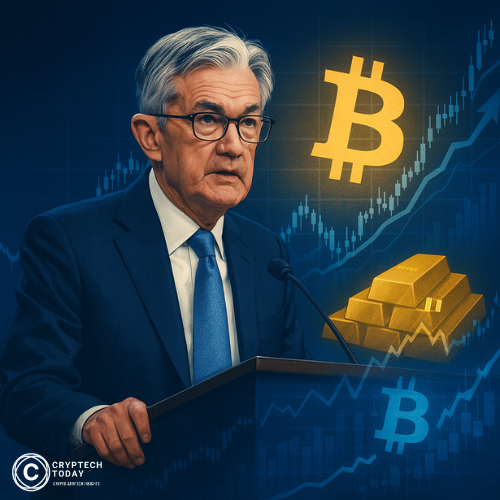
In the crypto markets, the Fed’s policy shift has been met with cautious optimism. Historically, rate cuts have tended to boost digital assets as investors rotate toward riskier instruments amid rising liquidity. Bitcoin hovered near $113,000 heading into the meeting, holding steady after a volatile pre-FOMC week. Traders say a clear signal of continued easing could trigger a near-term rally, though many warn that much of the optimism is already priced in.
The broader macro-crypto correlation has tightened over the past two years, meaning Fed policy decisions now act as a significant sentiment driver. Lower rates reduce opportunity costs for holding non-yielding assets like Bitcoin, while also improving funding conditions for crypto firms and exchanges. However, any hawkish surprise or a suggestion that the Fed might pause in December could quickly reverse momentum.
Reading Between the Lines: Powell’s Balancing Act
When Chair Powell steps to the podium tonight, markets will dissect every word for clues about how much patience the Fed retains. His challenge will be to balance credibility with caution: acknowledging that inflation progress has been meaningful, while insisting that policy cannot become complacent.
Analysts expect Powell to emphasise the theme of “gradualism”, avoiding both overreaction to soft data and premature confidence about the inflation outlook. Any reference to “monitoring the cumulative effects of past tightening” or “supporting a soft landing” will reinforce the market’s dovish expectations. But a hint of concern about wage resilience or energy-driven price volatility could temper the reaction.
The real test will come in December. If employment data continue to weaken and inflation readings stay subdued, another 25bps cut will likely follow. If not, October’s move could mark a short pause in a still-uncertain cycle.
The Bigger Picture
This week’s decision signals that the Fed has moved from fighting inflation to fine-tuning the slowdown. After two years of aggressive tightening, monetary policy is entering a more reactive phase, one that responds to data rather than dictates it. That shift is already reshaping global risk sentiment.
For investors, the takeaway is clear: the October cut itself matters less than what comes next. Markets are pricing in calm waters ahead, but as Powell often reminds, policy sailing remains data-dependent and the seas can change fast.