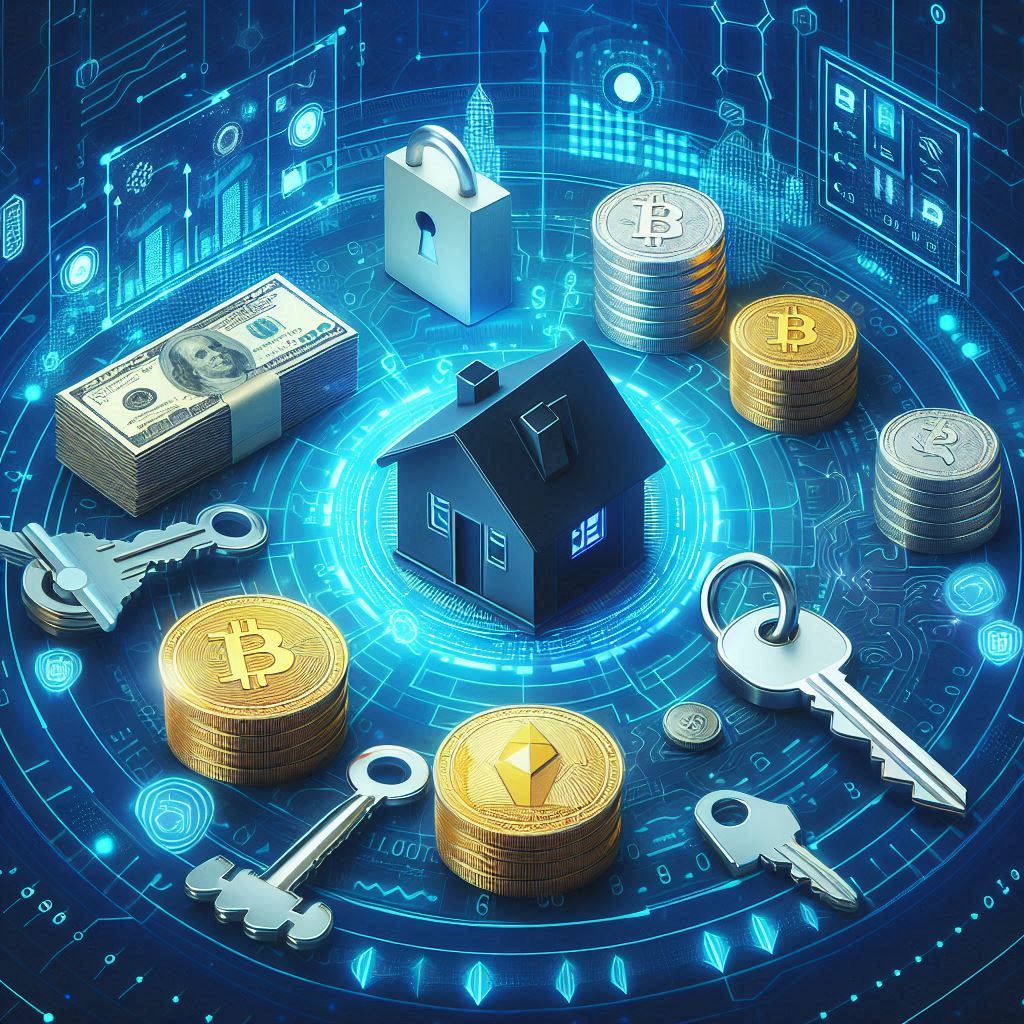
In recent years, blockchain technology has transformed financial markets, giving rise to a revolutionary concept known as asset tokenization. This process involves converting real-world assets, such as real estate, stocks, or commodities, into digital tokens on a blockchain. Tokenization enhances liquidity, broadens investment access, and streamlines asset transfers, making it a game-changer in modern finance. This guide provides an in-depth understanding of asset tokenization, explaining its benefits, applications, challenges, and future potential.
What is asset tokenization?
Asset tokenization is the process of creating a digital representation of a physical or intangible asset on a blockchain. Each token represents a fractional share of the asset, making it easier to buy, sell, and trade. There are two main categories of tokenized assets: tangible assets such as real estate, gold, commodities, artwork, and luxury goods, and intangible assets such as stocks, bonds, intellectual property, and digital rights. For example, instead of purchasing an entire property worth $500,000, investors can buy fractional ownership through tokens worth $100 or more, increasing accessibility.
How asset tokenization works
The tokenization process typically follows several key steps. First, a real-world asset is identified, evaluated, and assigned a value to determine how many tokens will be issued. Next, a smart contract, which is a self-executing contract with coded rules, is created on a blockchain to manage the asset’s ownership, transfer, and compliance. Once the smart contract is in place, tokens are generated on a blockchain and distributed to investors who can buy, sell, or trade them. After issuance, investors can trade their tokens on secondary markets or decentralized exchanges, improving asset liquidity. Lastly, regulatory frameworks are applied to ensure transparency, security, and legal compliance.
Also Read
Argentina’s tokenization of lithium, makes it a first of its kind
Benefits of asset tokenization
Tokenization provides several key benefits. It significantly increases liquidity by allowing traditionally illiquid assets, such as real estate or fine art, to be easily traded. Fractional ownership makes high-value investments more accessible by allowing investors to purchase small portions of assets. Transparency and security are enhanced through blockchain technology, which records transactions immutably, reducing fraud risks. By eliminating middlemen such as brokers and banks, tokenization also lowers transaction costs and improves efficiency. Moreover, global market access is expanded, as investors worldwide can participate in tokenized asset markets without geographical limitations.
Real-world applications of asset tokenization
Tokenization has numerous real-world applications across various industries. In real estate, property owners can tokenize their assets, allowing investors to purchase fractional shares and increase liquidity in the market. Companies can issue tokenized stocks and bonds instead of traditional IPOs, making it easier for retail investors to participate. Commodities such as gold, oil, and agricultural products can be tokenized, providing continuous trading without the need for physical storage. Intellectual property rights, including music, patents, and copyrights, can also be tokenized, enabling investors to earn a share of future revenue. Additionally, high-value artwork and collectables can be tokenized, allowing multiple investors to hold a fraction of these assets.
Challenges and risks in asset tokenization
Despite its benefits, asset tokenization faces several challenges. Regulatory uncertainty remains a significant hurdle, as governments worldwide are still developing frameworks for tokenized assets, leading to potential legal uncertainties. Security risks are another concern, as blockchain technology is susceptible to smart contract vulnerabilities and hacking risks. Market adoption is still in its early stages, and traditional investors may hesitate to embrace blockchain-based asset trading due to unfamiliarity and perceived risks. Additionally, the technical complexity of developing a secure and scalable tokenization platform requires expert knowledge of blockchain, smart contracts, and financial regulations.
Regulatory and legal considerations
Regulatory frameworks play a crucial role in asset tokenization. Compliance with securities laws is essential, as tokenized stocks and bonds must adhere to financial regulations set by authorities such as the SEC in the United States, SEBI in India, and the FCA in the United Kingdom. Anti-money laundering (AML) and know-your-customer (KYC) protocols must be implemented to prevent fraud and ensure investor protection. Taxation policies may also impact tokenized assets, as governments could impose capital gains taxes on these digital securities. Countries such as Switzerland, Singapore, and the UAE have embraced tokenization with clear regulations. Others are still in the process of defining their approach.
Custodial vs. non-custodial approaches
There are two primary ways to hold tokenized assets: custodial and non-custodial approaches. In a custodial approach, a centralized exchange or financial institution holds the assets and manages transactions on behalf of investors. This method is more user-friendly but carries risks such as fraud and mismanagement, as seen in past failures like the FTX collapse. In a non-custodial approach, investors retain control over their tokens in personal wallets, reducing third-party risks. This method ensures full ownership. But it also requires investors to manage their security keys and be responsible for asset protection.
The future of asset tokenization
Experts predict that the tokenized asset market could reach $16 trillion by 2030, driven by advancements in blockchain technology and increased institutional adoption. One key trend is the development of tokenized central bank digital currencies (CBDCs), where governments issue digital versions of national currencies to facilitate seamless transactions. The integration of artificial intelligence with decentralized finance (DeFi) is expected to enhance tokenized markets through automated risk assessment and compliance. Major financial institutions such as JPMorgan and Mastercard are already exploring tokenization for bonds, real estate, and stocks, signalling a shift toward mainstream adoption.
Also Read