Cryptech Today
  • News
    • Market Watch
    • Policy & Regulation
    • Geopolitics & Economy
    • Security & Risks
  • Blockchain & Web3
  • Finance & Fintech
    • Cryptocurrency
    • Fintech & Digital Finance
  • Voices
    • Events & Interviews
    • People & Companies
No Result
View All Result
tokenomist ai
Cryptech Today
  • News
    • Market Watch
    • Policy & Regulation
    • Geopolitics & Economy
    • Security & Risks
  • Blockchain & Web3
  • Finance & Fintech
    • Cryptocurrency
    • Fintech & Digital Finance
  • Voices
    • Events & Interviews
    • People & Companies
No Result
View All Result
Cryptech Today
No Result
View All Result
Home Cryptocurrency

Chain analysis key to investigate cryptocurrency hacks

Pranav Joshi by Pranav Joshi
February 28, 2025
in Cryptocurrency
0
Chain analysis key to investigate cryptocurrency hacks
75
SHARES
1.2k
VIEWS
Share on FacebookShare on Twitter

Cryptocurrency hacks have become increasingly common, with attackers exploiting vulnerabilities in exchanges, smart contracts, and wallets. Recently, a major hack targeted multiple exchanges, including Phemex, Bybit, and BingX, as revealed through blockchain analysis. These incidents highlight the importance of chain analysis, a crucial investigative method used to track stolen funds and identify hackers.

Table of Contents

Toggle
  • You might also like
  • Is Bitcoin Going to Reach Its Top in 2026? A Market That No Longer Moves on Tweets
  • Capitulation or Opportunity? Why Bitcoin’s Fall to $94K Changes the Playbook — $19B Liquidated, Whales Buying $4.6B
  • Trump’s Crypto Empire: How Policy, Family, and Foreign Alliances Built a Fortune
    • How do cryptocurrency hacks happen?
    • What is Chain Analysis and how does it help?
    • How do investigators track stolen Crypto?
    • What can exchanges and users do to stay safe from cryptocurrency hacks?

You might also like

Is Bitcoin Going to Reach Its Top in 2026? A Market That No Longer Moves on Tweets

Capitulation or Opportunity? Why Bitcoin’s Fall to $94K Changes the Playbook — $19B Liquidated, Whales Buying $4.6B

Trump’s Crypto Empire: How Policy, Family, and Foreign Alliances Built a Fortune

We’ll dive into how crypto hacks take place, how stolen funds flow through the blockchain, and how investigators use blockchain forensics to trace illegal transactions.

How do cryptocurrency hacks happen?

Crypto exchange hacks typically follow a similar pattern. The first step involves hackers exploiting weaknesses in exchange security. These weaknesses may be due to vulnerabilities in smart contracts, API (application programming interface) flaws, or even leaked private keys that grant unauthorized access to wallets. Once a weakness is found, attackers proceed to drain funds from the affected exchange or user wallets.

Once the assets, usually cryptocurrencies like Bitcoin, Ethereum, or Stablecoins, are stolen, the hacker needs to launder the funds. Laundering helps them avoid detection and makes it harder for law enforcement to track down the stolen money. To do this, hackers use a combination of techniques, such as sending funds through multiple wallets, using mixing services, or swapping assets across different blockchains. Finally, the hacker’s ultimate goal is to withdraw or convert these funds into real-world money, often using peer-to-peer transactions or underground markets where they can avoid KYC (Know Your Customer) verification.

What is Chain Analysis and how does it help?

Chain analysis, also known as blockchain forensics, is the process of investigating blockchain transactions to uncover illicit activities. Unlike traditional financial transactions, which are private and controlled by banks, blockchain transactions are public. Every transaction is recorded on a distributed ledger, meaning that anyone with the right tools can trace the movement of funds.

By analyzing transaction patterns, investigators can identify which wallets belong to hackers. They do this by tracking the wallets that received stolen funds and following the money trail as it moves through different accounts. Chain analysis tools such as Chainalysis, TRM Labs, and Elliptic provide detailed transaction mapping, making it easier to detect suspicious activity.

Lazarus Group just connected the Bybit hack to the Phemex hack directly on-chain commingling funds from the intial theft address for both incidents.

Overlap address:
0x33d057af74779925c4b2e720a820387cb89f8f65

Bybit hack txns on Feb 22, 2025:… pic.twitter.com/dh2oHUBCvW

— ZachXBT (@zachxbt) February 22, 2025

Blockchain forensics works by identifying wallet addresses linked to hacks, then tracking where those funds are sent. If a hacker tries to transfer money to an exchange, investigators can alert the exchange to freeze the funds before they are withdrawn. This process is why stolen cryptocurrency is often harder to cash out than hackers expect.

How do investigators track stolen Crypto?

The first step in any blockchain investigation is identifying the hacker’s wallets. In the recent hacks involving Phemex, Bybit, and BingX, certain wallet addresses were flagged as being controlled by attackers. These wallets are labelled as “exploiter wallets” because they receive large sums of stolen cryptocurrency. Once identified, investigators analyze the movement of funds.

🚨 Free Real-time Bybit Exploit Data 🚨

Elliptic has launched a free data feed of illicit addresses linked to the Bybit exploit.

🔍 Why it matters:

✅ Minimize exposure to sanctions
✅ Stop laundering of stolen funds
✅ Strengthen crypto security

Access via CSV or API ⬇️… pic.twitter.com/U9Qa2tc8Zz

— Elliptic (@elliptic) February 25, 2025

Hackers typically do not keep stolen funds in a single wallet for long. Instead, they rapidly transfer the money between multiple addresses to break the transaction link. This method, known as “peeling”, makes it difficult to track the origin of funds. However, forensic tools use advanced algorithms to cluster wallets that are likely controlled by the same entity.

To further obscure their tracks, hackers use money laundering techniques such as mixers, which combine multiple users’ funds to create confusion, making it harder to trace the source of a transaction. Another method involves cross-chain swapping, where funds are moved between different blockchains to make tracking more complicated. By sending assets from Ethereum to Bitcoin or another blockchain, hackers create additional hurdles for investigators.

Despite these attempts, blockchain forensics experts can still detect patterns. By following transactions and identifying known laundering services, law enforcement agencies work with exchanges to blacklist suspicious wallets. If a hacker makes a mistake—such as withdrawing stolen funds to an exchange that requires identity verification—investigators can link the wallet to a real person, leading to potential arrests.

What can exchanges and users do to stay safe from cryptocurrency hacks?

To prevent such attacks, cryptocurrency exchanges must implement stronger security measures. This includes using multi-signature wallets that require multiple approvals for withdrawals, conducting regular security audits, and running bug bounty programs to identify vulnerabilities before hackers do. For individual users, enabling two-factor authentication (2FA) and storing cryptocurrency in cold wallets (offline storage) can add an extra layer of security.

Regulatory authorities also play a crucial role in tracking cybercriminals. When law enforcement agencies collaborate with exchanges and blockchain analytics firms, they improve their ability to seize stolen assets and arrest hackers before they can cash out their stolen funds.

Also Read
The Bybit hack and its aftermath

Tags: BitcoinBybit HackChain analysisCryptocurrencycryptocurrency hacksStablecoins
Share30Tweet19
Pranav Joshi

Pranav Joshi

A blockchain book author and crypto expert, dedicated to making cryptocurrency simple for everyone — byte by byte.

Recommended For You

Is Bitcoin Going to Reach Its Top in 2026? A Market That No Longer Moves on Tweets

by Pranav Joshi
January 6, 2026
0
Is Bitcoin Going to Reach Its Top in 2026? A Market That No Longer Moves on Tweets

As we move through the first week of January 2026, the air in the crypto market feels different. Gone are the days when a single tweet could send...

Read moreDetails

Capitulation or Opportunity? Why Bitcoin’s Fall to $94K Changes the Playbook — $19B Liquidated, Whales Buying $4.6B

by Pranav Joshi
November 18, 2025
0
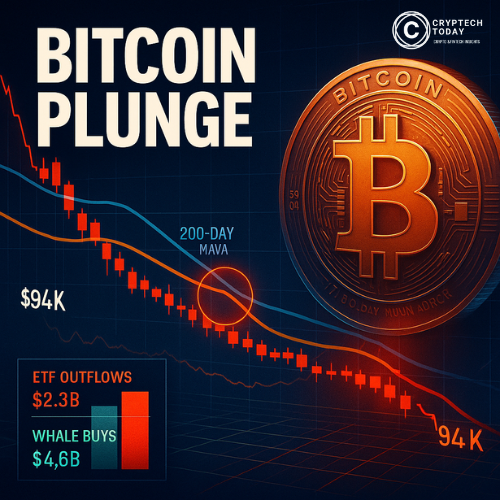
Bitcoin price chart showing death cross at $94k support; Fear & Greed Index at extreme fear 10; whale accumulation vs ETF outflows comparison

Bitcoin plunged below $94,000 on November 17, 2025, erasing most of 2025’s gains and dragging the market into “extreme fear.” The Crypto Fear & Greed Index sits near...

Read moreDetails

Trump’s Crypto Empire: How Policy, Family, and Foreign Alliances Built a Fortune

by Pranav Joshi
September 16, 2025
0
Trump’s Crypto Empire: How Policy, Family, and Foreign Alliances Built a Fortune

Trump Crypto Empire and Regulatory Capture is becoming one of the most defining forces in global finance. Donald Trump has tied nearly 73% of his wealth to cryptocurrency...

Read moreDetails

Shibarium Bridge Hack: $2.4M Stolen as Developers Freeze Staking

by Pranav Joshi
September 15, 2025
0
Shibarium Bridge Hack: $2.4M Stolen as Developers Freeze Staking

In one of the most dramatic moments of the year for the Shiba Inu ecosystem, the Shibarium hack on September 13, 2025, sent shockwaves across the crypto world....

Read moreDetails

Trump’s $5 Billion Crypto Fortune: Where Personal Business Meets Public Policy

by Pranav Joshi
September 9, 2025
0
Trump’s $5 Billion Crypto Fortune: Where Personal Business Meets Public Policy

Donald Trump’s cryptocurrency empire has ballooned into a $5 billion fortune, powered largely by his family’s stake in World Liberty Financial (WLF). What makes this story extraordinary is...

Read moreDetails
Next Post
The rise of fake GitHub repositories in cybercrime

The rise of fake GitHub repositories in cybercrime

Related News

Cryptocurrency exchanges displayed on a digital screen with financial graphs and sanctions text.

U.S. Treasury Sanctions Cryptocurrency Exchanges Linked to Iran

February 1, 2026
Courtroom scene with lawyers discussing cryptocurrency regulations and Binance logo visible.

Binance Wins Legal Victory in Alabama Court Case

March 13, 2026
A distressed office space with empty desks and a closed sign, symbolizing workforce cuts in crypto.

Gemini Exits UK, EU, Australia Amid Workforce Cuts and Regulatory Issues

February 6, 2026

Browse by Category

  • BlockBasics
  • Blockchain
  • Blockchain & Web3
  • Central Bank Digital Currency (CBDC)
  • Crypto
  • Crypto Now
  • Cryptocurrency
  • Ethereum
  • Finance
  • Fintech & Digital Finance
  • Geopolitics & Economy
  • GreenLedger
  • Inside CrypTechToday
  • Legal & Business Pages
  • Market Watch
  • People & Companies
  • Policy & Regulation
  • Politics
  • Security & Risks
  • Technology
  • World
  • About Us
  • Privacy Policy
  • Terms of Service
  • Disclosure
  • Cookie Policy
  • Disclaimer
  • Contact Us
Mail Us @ contactus@cryptech.com

© 2025 CrypTechToday All rights reserved.

No Result
View All Result
  • News
    • Market Watch
    • Policy & Regulation
    • Geopolitics & Economy
    • Security & Risks
  • Blockchain & Web3
  • Finance & Fintech
    • Cryptocurrency
    • Fintech & Digital Finance
  • Voices
    • Events & Interviews
    • People & Companies

© 2025 CrypTechToday All rights reserved.

Are you sure want to unlock this post?
Unlock left : 0
Are you sure want to cancel subscription?