• Write for Us
  • Advertise
  • Tools
  • About
  • Contact
Cryptech Today
  • News
    • Market Watch
    • Policy & Regulation
    • Geopolitics & Economy
    • Security & Risks
  • Blockchain & Web3
  • Finance & Fintech
    • Cryptocurrency
    • Fintech & Digital Finance
  • Voices
    • Events & Interviews
    • People & Companies
No Result
View All Result
tokenomist ai
Cryptech Today
  • News
    • Market Watch
    • Policy & Regulation
    • Geopolitics & Economy
    • Security & Risks
  • Blockchain & Web3
  • Finance & Fintech
    • Cryptocurrency
    • Fintech & Digital Finance
  • Voices
    • Events & Interviews
    • People & Companies
No Result
View All Result
Cryptech Today
No Result
View All Result
Home Cryptocurrency

OM token crash explained: What happened to MANTRA’s token?

Pranav Joshi by Pranav Joshi
April 16, 2025
in Cryptocurrency
0
OM token crash explained: What happened to MANTRA’s token?

OM token crash explained: What happened to MANTRA’s token?

82
SHARES
1.4k
VIEWS
Share on FacebookShare on Twitter

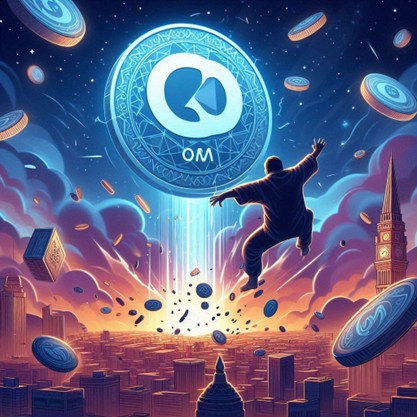
In mid-April 2025, something shocking happened in the crypto world — the price of a popular token called OM, which belongs to the blockchain project MANTRA, suddenly dropped by over 90% in just a few hours. This unexpected crash left traders panicking, wiped out millions of dollars, and sparked a lot of confusion about what really went wrong.

Table of Contents

Toggle
  • You might also like
  • Solana vs Ethereum in 2026: Speed, Decentralization, and the Battle for Institutional Liquidity
  • The $86K Mirage: Why Bitcoin’s 8-Month High Is a Capital Rotation, Not a New Bull Wave
  • Bitcoin On-Chain Signals: What Every Investor Must Track in the Spot ETF Era
  • What are OM and MANTRA?
  • What happened?
  • What are “Liquidations” and why do they matter?
  • The CEO of MANTRA, John Patrick Mullin, blamed centralized exchanges (CEXs) like Binance and OKX for the crash, stating that they triggered forced liquidations too quickly and during a low-activity period, which caused a rapid price collapse. He insisted that neither the MANTRA team nor early investors sold any tokens, calling the crash both unfair and avoidable. However, exchanges like OKX and Binance shared a different view. Their internal data and blockchain analysis showed large amounts of OM tokens being moved to exchanges in the days leading up to the crash. This was a possible signal of planned sell-offs. OKX also highlighted that OM had unusual tokenomics, with most of the supply concentrated in a few wallets, making the market more vulnerable to volatility.
  • Tokenomics
  • Were big investors selling?
  • A pump-and-dump
  • Lessons for crypto investors
  • What’s next for OM and MANTRA?
  • Also Read

You might also like

Solana vs Ethereum in 2026: Speed, Decentralization, and the Battle for Institutional Liquidity

The $86K Mirage: Why Bitcoin’s 8-Month High Is a Capital Rotation, Not a New Bull Wave

Bitcoin On-Chain Signals: What Every Investor Must Track in the Spot ETF Era

What are OM and MANTRA?

OM is the native token (like a special coin) of the MANTRA blockchain, which is a project focused on real-world asset tokenization. In other words, the conversion of real estate or government bonds into digital tokens to be traded on the blockchain.

Before the crash, OM had been doing really well. There was an over 800% increase in its price in one year, and it had partnerships, a big community, and even licenses from regulatory bodies like VARA (in Dubai). Many believed this was a solid, growing project.

What happened?

On April 13, 2025, OM was trading at around $6.3 — but within hours, its price dropped to around $0.37. This crash happened very suddenly and took many people by surprise. There was automatic liquidation of over $71 million worth of investments. OM’s total market value dropped from almost $6 billion to under $700 million.

Seems like the Mantra team were holding a large amount of supply and market sold everything.

Team needs to address this or $OM looks like it could head to zero.

Biggest rug pull since LUNA/FTX?? https://t.co/fU0Hk0uOGr pic.twitter.com/xSz5zP1QrH

— Gordon (@AltcoinGordon) April 13, 2025

What are “Liquidations” and why do they matter?

Many crypto traders use leverage, which means they borrow extra money to make bigger bets. But if the price of their token drops too much, their position is automatically closed to prevent bigger losses — this is called forced liquidation.

Think of it like this: If you borrow money to invest, and the value of your investment falls too much, the lender (the crypto exchange) will sell your position to get their money back. If a lot of people get liquidated at once, it can cause prices to fall even more, like a chain reaction.

That’s what seems to have happened with OM.

The CEO of MANTRA, John Patrick Mullin, blamed centralized exchanges (CEXs) like Binance and OKX for the crash, stating that they triggered forced liquidations too quickly and during a low-activity period, which caused a rapid price collapse. He insisted that neither the MANTRA team nor early investors sold any tokens, calling the crash both unfair and avoidable. However, exchanges like OKX and Binance shared a different view. Their internal data and blockchain analysis showed large amounts of OM tokens being moved to exchanges in the days leading up to the crash. This was a possible signal of planned sell-offs. OKX also highlighted that OM had unusual tokenomics, with most of the supply concentrated in a few wallets, making the market more vulnerable to volatility.

Tokenomics

Here’s a key point that might have caused the crash: just one wallet held 90% of all OM tokens. That means only about 10% of the total supply was available to trade. If even a few big holders decide to sell, it can crash the price, because there’s not enough demand or liquidity to handle it. It’s like trying to sell a lot of gold in a small market — the price will fall quickly if there aren’t enough buyers.

Were big investors selling?

Blockchain analysts spotted 17 wallets that moved about 43.6 million OM tokens (worth around $227 million) to exchanges right before the crash. Some of these wallets were believed to be linked to well-known investment firms like Laser Digital (Nomura) and Shorooq Partners. However, these firms denied selling anything and showed proof that their tokens were still locked.

The MANTRA CEO also claimed these wallets were wrongly labeled, and that the tokens weren’t actually sold.

A pump-and-dump

Many in the crypto community began to suspect that this might have been a “pump-and-dump”. This is a tactic where a token’s price is pushed up (pumped) by hype, and then big holders sell off (dump), leaving small investors with heavy losses.

While there’s no solid proof yet that this was intentional, the crash revealed serious flaws in OM’s structure:

  • Too much control by a few wallets
  • Limited supply in the market
  • Poor liquidity
  • Lack of clear communication and transparency

Lessons for crypto investors

A crypto trader, be it a beginner or someone who is experienced, needs to take some lessons from this episode. It’s important to note if one wallet controls most of the tokens, that’s a red flag. Likewise, it’s necessary to understand that just because a token is going up fast doesn’t mean it’s safe. Thirdly, projects should communicate clearly about token locks, investor holdings, and upcoming changes. Most important, however, is to take heed that liquidations can wipe you out fast if the market moves against you.

What’s next for OM and MANTRA?

    The MANTRA team has promised to be more transparent going forward and is planning a community session to explain what happened. The OM token has recovered slightly, now trading above $1, but it’s still far below its previous high. Whether investors regain trust depends on how the team handles this crisis and if they improve on how the project is run. Rebuilding confidence won’t be easy.

    Also Read

    How geopolitics and macroeconomics are reshaping the crypto world

    Tags: CryptocurrencyForced LiquidationLiquidationMANTRAMANTRA BlockchainOMTokenomics
    Share33Tweet21
    Pranav Joshi

    Pranav Joshi

    A blockchain book author and crypto expert, dedicated to making cryptocurrency simple for everyone — byte by byte.

    Recommended For You

    Solana vs Ethereum in 2026: Speed, Decentralization, and the Battle for Institutional Liquidity

    by Pranav Joshi
    September 29, 2026
    0
    Monolithic single state machine architecture of Solana compared to Ethereum modular rollup and base layer settlement stack

    On an algorithmic trading desk in lower Manhattan, execution speed is not a philosophical preference. It is the difference between capturing a four-basis-point arbitrage spread or getting front-run...

    Read moreDetails

    The $86K Mirage: Why Bitcoin’s 8-Month High Is a Capital Rotation, Not a New Bull Wave

    by Pranav Joshi
    September 22, 2026
    0
    Institutional financial analytics screen showing Bitcoin rally to $86,000 driven by spot ETF inflows and delta neutral basis trade

    Bitcoin spiked past $86,290 on the back of a single-day $999 million spot ETF inflow record. But beneath the green candles sits a cold reality: retail traders are...

    Read moreDetails

    Bitcoin On-Chain Signals: What Every Investor Must Track in the Spot ETF Era

    by Pranav Joshi
    September 21, 2026
    0
    Institutional Bitcoin on-chain analysis dashboard showing network settlement metrics and ETF custody data flows

    Wall Street custody broke simple exchange flow metrics. Here is how institutional analysts separate structural supply drying from phantom wallet churn, calculate real cycle tops, and avoid false...

    Read moreDetails

    Bitcoin vs Ethereum: Which Is the Better Investment in 2026?

    by Pranav Joshi
    August 29, 2026
    0
    Bitcoin vs Ethereum: Which Is the Better Investment in 2026?

    Bitcoin is the cleaner, simpler bet. Ethereum is the more complex, higher-upside wager that on-chain applications will become core financial infrastructure. For most people: BTC first, ETH as...

    Read moreDetails

    Is Bitcoin Going to Reach Its Top in 2026? A Market That No Longer Moves on Tweets

    by Pranav Joshi
    January 6, 2026
    0

    As we move through the first week of January 2026, the air in the crypto market feels different. Gone are the days when a single tweet could send...

    Read moreDetails
    Next Post
    EU's regulatory changes usher in remapping of crypto and AI

    EU's regulatory changes usher in remapping of crypto and AI

    Related News

    Illustration representing FIU-IND regulatory oversight and anti-money laundering compliance for offshore cryptocurrency exchanges in India

    India FIU Crypto Compliance: What Traders Must Know

    September 21, 2026

    USD1 Depeg: Political Volatility Tests Stablecoin Stability

    February 24, 2026
    Special Rupee Vostro Accounts (SRVAs)

    Special Rupee Vostro Accounts (SRVAs) Explained

    August 20, 2025

    Browse by Category

    • BlockBasics
    • Blockchain
    • Blockchain & Web3
    • Central Bank Digital Currency (CBDC)
    • Crypto
    • Crypto Now
    • Cryptocurrency
    • Ethereum
    • Finance
    • Fintech & Digital Finance
    • Geopolitics & Economy
    • GreenLedger
    • Inside CrypTechToday
    • Investing
    • Legal & Business Pages
    • Market Watch
    • People & Companies
    • Policy & Regulation
    • Politics
    • Security & Risks
    • Technology
    • World
    cryptechtoday

    CrypTechToday is a digital platform covering cryptocurrency, blockchain, and global finance, combined with practical tools for real-world crypto use.

    • About Us
    • Tools
    • Privacy Policy
    • Terms of Service
    • Disclosure
    • Cookie Policy
    • Disclaimer
    • Contact Us
    • Write for Us
    • Advertise
    • Tools
    • About
    • Contact

    © 2025 CrypTechToday All rights reserved.

    No Result
    View All Result
    • News
      • Market Watch
      • Policy & Regulation
      • Geopolitics & Economy
      • Security & Risks
    • Blockchain & Web3
    • Finance & Fintech
      • Cryptocurrency
      • Fintech & Digital Finance
    • Voices
      • Events & Interviews
      • People & Companies

    © 2025 CrypTechToday All rights reserved.

    Are you sure want to unlock this post?
    Unlock left : 0
    Are you sure want to cancel subscription?

    CrypTech Market Watch

    Daily institutional crypto intelligence, ETF flows, and regulatory breakdowns straight to your inbox.

    Subscribe to our weekly newsletter below and never miss the latest product or an exclusive offer.

    Enter your email address

    Thanks, I’m not interested