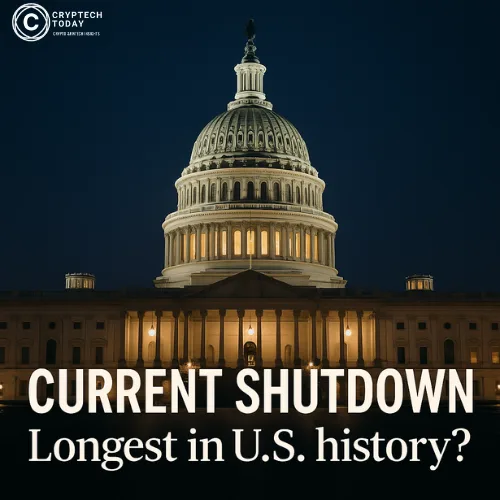
The U.S. federal government shutdown, now stretching into its second week after lawmakers failed to pass appropriations at the start of the fiscal year, has moved from political noise to tangible economic friction. Agencies critical to markets and crypto oversight are operating at reduced capacity: the SEC and CFTC are running with a bare minimum of staff, regulatory reviews are stalled, and hundreds of thousands of federal workers face mounting financial stress. The shutdown’s ripples are already being felt in markets, enforcement, and programs that support the most vulnerable Americans.
The impasse and what’s at stake
The Government Shutdown began on October 1, 2025, when Congress missed the deadline to fund federal programs. The central dispute is healthcare: Democrats demand restoration of enhanced Affordable Care Act subsidies and a reversal of deep Medicaid cuts; Republicans are pressing a “clean” continuing resolution that refuses to reopen that negotiation. Multiple Senate stopgap votes have failed to reach the 60-vote cloture threshold, and the House remains in recess until mid-month, a dynamic that increases the likelihood this drags on.
For crypto markets, the timing could not be worse. The SEC has publicly said it will operate “under modified conditions” with extremely limited staff, delaying ETF reviews, enforcement actions and interpretive guidance. The CFTC is similarly constrained, with only an acting chair in place. That regulatory paralysis creates uncertainty for exchanges, projects, and investors during a period of intense industry activity.
Federal workers and the human tipping point
Roughly 750,000 federal workers are furloughed daily, while about 700,000 essential staff must continue working without pay. The most immediate pressure point is payroll: civilian employees expect electronic pay on October 10, and the first military missed paycheck would fall on October 15. Historically, missed paydays are a political inflexion point. Once they happen, public and legislative pressure to resolve the impasse rises sharply.
Beyond paychecks, the shutdown has immediate human costs: air traffic controllers, TSA screeners, and border agents are working without compensation; national park operations are curtailed; and critical food-assistance programs like WIC face imminent funding shortfalls that threaten millions of mothers and young children. States and localities are already triaging services with contingency funds, but those buffers are finite.
Economic damage and the data blackout
Economists are fast adding up the damage. The Congressional Budget Office and private forecasters estimate hundreds of millions in daily costs from back-pay and stalled projects; Goldman Sachs estimates each week of shutdown trims quarterly GDP growth by about 0.15 percentage points. Beyond the immediate drag, a prolonged shutdown creates a data vacuum: critical releases such as employment, inflation, and other federal statistics can be delayed, complicating market forecasting and monetary policy decisions.
What the Government Shutdown means specifically for crypto and finance
Practical effects on crypto markets and financial services include:
- Delayed regulatory approvals — ETF rulings, guidance on market structure, and enforcement actions may be paused, creating legal uncertainty for exchanges and issuers.
- Slower enforcement — probes into market manipulation, wash trading, and unregistered platforms could be temporarily deprioritised, potentially encouraging risky behaviour.
- Liquidity and market confidence — reduced agency oversight can amplify volatility if market actors interpret the data blackout and institutional inertia as a green light for opportunistic trading.
Industry voices are blunt: shrinking SEC/CFTC capacity undermines investor confidence at a time when digital-asset markets seek regulatory clarity. For firms hoping to close compliance gaps or launch regulated products, the shutdown buys competitors time and increases the risk that key rulemakings will be delayed indefinitely.
Political calculus and the timeline to resolution
Both parties show little willingness to budge. Democrats frame the fight as protecting healthcare for millions; Republicans frame it as fiscal discipline. The White House has raised the spectre of layoffs if negotiations fail, escalating the stakes. The next pivot point will likely be the first missed civilian paychecks, a public pressure moment that has historically accelerated compromise. But with the House out of session until October 13 and both sides entrenched, expect the shutdown to last at least several more weeks unless a surprise deal emerges.
Bottom line for readers and market participants
The Government Shutdown has moved beyond political theatre to tangible financial and operational disruption. For crypto firms and investors, the most actionable risks are regulatory delay, enforcement slowdowns, and macro data gaps that increase market uncertainty. For everyday Americans, the consequences are immediate and human: missed paychecks, strained safety-net programs, and disruptions to travel and public services.
If paychecks are missed next week, expect a rapid political reaction and renewed urgency in Congress, but don’t count on a neat or quick fix. The shutdown is a reminder that even well-structured markets and emerging industries like crypto can be vulnerable when the public institutions that underpin rules, data, and enforcement are offline.