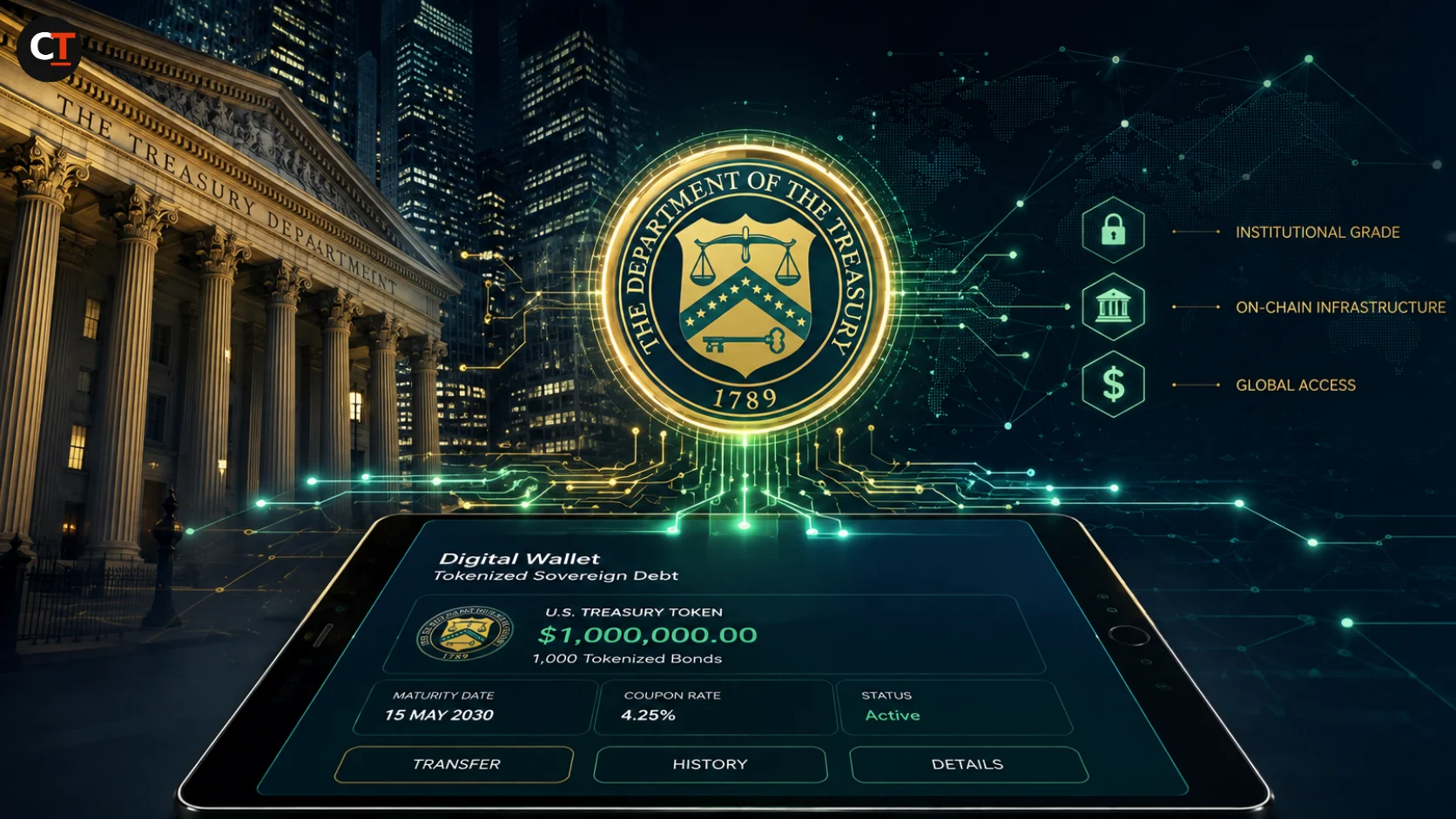
For years, holding stablecoins meant letting issuers keep all the interest earned on your cash. Now, tokenized treasury funds from BlackRock and Franklin Templeton are passing sovereign yields directly to digital wallets.
Key Takeaways
- Passing the yield back: Standard stablecoins pay 0% native interest to holders. Tokenized treasury funds pass the 4.5% to 5.0% US sovereign yield directly to your wallet.
- A $15 billion market: Institutional funds like BlackRock BUIDL and Franklin Templeton FOBXX have rapidly grown into the largest real-world asset category on blockchain.
- Instant 24/7 collateral: Unlike traditional mutual funds with 2-day redemption cycles, tokenized T-bills can be traded, pledged, or redeemed against stablecoins in seconds.
Consider a corporate treasurer or international fintech startup holding $20 million in digital dollars (USDC) to fund global developer payrolls.
In 2022, that $20 million sat completely idle in a digital wallet. The stablecoin issuer deposited those reserve dollars into short-term US Treasury bills, earning over 5% annual interest. The issuer kept every single dollar of that interest, pocketing over $1 million annually on that deposit alone. The corporate treasurer earned exactly zero.
In 2026, that equation flipped completely.
Today, that same corporate treasurer swaps their stablecoins into BlackRock’s USD Institutional Digital Liquidity Fund (known as BUIDL) or Franklin Templeton’s FOBXX on Stellar.
The money is still held on a blockchain. It can still be transferred at midnight on a Sunday. But now, the smart contract automatically calculates interest daily and deposits newly minted yield tokens directly into the company’s wallet.
This is tokenized government debt: the single fastest-growing sector in decentralized capital markets, surpassing $15 billion in active on-chain assets.
The 60-Second Primer: What Is a US Treasury Bill?
Before looking at the blockchain machinery, let us establish what a Treasury bill actually is.
A US Treasury bill (T-bill) is a short-term debt obligation issued by the United States Department of the Treasury with maturities ranging from 4 weeks to 52 weeks.
In traditional finance, T-bills are considered the world’s primary risk-free asset because they are backed by the full faith, credit, and taxing authority of the US government. They pay predictable interest and form the foundation of global cash management.
For over a decade, crypto markets have had digital cash (stablecoins) and volatile native tokens (Bitcoin, Ether). What was missing was an on-chain risk-free interest rate backed by real sovereign credit. Tokenized T-bills fill that exact gap.
How Tokenized Treasury Funds Actually Work
How does a physical government bond registered on the Federal Reserve’s Fedwire system become a tradable digital token on Ethereum or Solana? The flow operates in five clear steps.
| Step | Action | What Happens Under the Hood |
|---|---|---|
| 1. Investor Deposit | Deposit USDC or Fiat | The investor sends stablecoins or US dollars to a regulated tokenized fund issuer (e.g., BlackRock, Ondo Finance). |
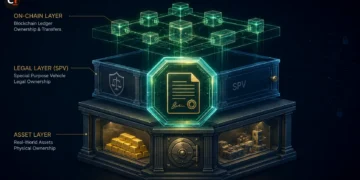
| 2. Collateral Purchase | Buy US Sovereign Debt | The fund manager takes the cash and buys short-term US Treasury bills, holding them in a qualified custodian bank (such as BNY Mellon). |
| 3. Smart Contract Minting | Mint On-Chain Tokens | The fund’s smart contract mints an exact dollar-equivalent amount of fund tokens (e.g., BUIDL, USDY, FOBXX) into the investor’s wallet. |
| 4. Daily Yield Accrual | Automated Rebase or NAV Growth | As the US government pays interest on the T-bills, the smart contract automatically increases the investor’s token balance (rebasing) or raises the token’s redeemable price. |
| 5. Instant Redemption | 24/7 Cash-Out | The investor can swap their yield tokens back into stablecoins (USDC) in seconds through automated smart contract liquidity pools without waiting for traditional banking days. |
The Big Three: Who Is Leading the Market in 2026?
The tokenized sovereign debt landscape is dominated by three institutional models:
1. BlackRock BUIDL (Institutional Leader)
Launched on Ethereum in partnership with Securitize, BlackRock’s USD Institutional Digital Liquidity Fund (BUIDL) invests 100% of its assets in cash, short-term US Treasuries, and repurchase agreements. BUIDL pays interest daily via token rebasing. It caters to large crypto foundations, corporate treasuries, and institutional funds with a $5 million minimum investment limit.
2. Franklin Templeton FOBXX (The Mutual Fund Pioneer)
Franklin Templeton was the first major asset manager to use a public blockchain to process transactions and record share ownership for a registered US 1940 Act mutual fund. Operating on Stellar and Polygon, FOBXX allows users to hold mutual fund shares directly on-chain.
3. Ondo Finance (Retail & Yield Innovation)
Ondo introduced products like OUSG (backed by institutional BlackRock funds) and USDY (a tokenized yield-bearing note backed by short-term Treasuries and bank deposits). Ondo opened sovereign dollar yields to non-US retail and corporate users with significantly lower capital minimums.
Comparison: Tokenized T-Bill vs. Traditional Indian Fixed Deposit vs. Liquid Mutual Fund
How does a tokenized US Treasury fund stack up against traditional cash management tools available to Indian investors?
| Feature | Tokenized US Treasury (e.g., USDY/BUIDL) | Indian Bank Fixed Deposit (FD) | Indian Liquid Mutual Fund |
|---|---|---|---|
| Underlying Currency | US Dollar (USD) | Indian Rupee (INR) | Indian Rupee (INR) |
| Underlying Asset | US Sovereign Debt (T-bills) | Commercial Bank Liability | Short-term Indian T-bills & Commercial Paper |
| Settlement & Liquidity | Instantaneous (24/7) | Instant to T+1 (with early break penalty) | T+1 business day |
| Currency Risk | Exposed to USD/INR exchange rate | None for domestic spenders | None for domestic spenders |
| Composability | Can be used as on-chain loan collateral | Cannot be used across web3 protocols | Cannot be used across Web3 protocols |
| Taxation in India | 30% flat VDA tax if classified as crypto | Taxed at slab rates | Taxed at slab rates (debt mutual fund rules) |
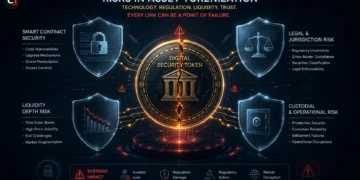
The 4 Real Risks You Must Understand
While the underlying US government bond carries virtually zero credit default risk, the digital wrapper introduces risks that traditional paper bonds do not have.
1. Smart Contract Bugs:
If the software code that mints and distributes the yield tokens contains an undiscovered vulnerability, attackers could exploit the contract and drain liquidity reserves. Institutional funds mitigate this through multi-signature administrative controls and third-party security audits.
2. Liquidity Pool Gaps:
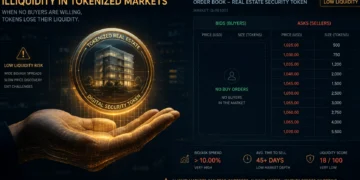
While institutional redemptions against primary reserves occur reliably during US banking hours, instant weekend swaps depend on secondary decentralized liquidity pools. During market panics, swapping $10 million on a Sunday night can cause minor slippage if liquidity pools become thin.
3. Legal and Regulatory Treatment:
In jurisdictions like India, digital tokens held on public blockchains may fall under Section 115BBH of the Income Tax Act, triggering a flat 30% tax on gains with no deduction for expenses, regardless of whether the underlying asset is a conservative sovereign bond.
4. Custodial Ring-Fencing:
As explained in our guide to SPVs and legal wrappers, always verify that the underlying T-bills are held in a legally segregated, bankruptcy-remote trust so that issuer insolvency cannot affect your capital.
Who Can Access This Today?
Access currently depends on two factors: your geography and your net worth.
- Institutional Tier ($5M+): BlackRock BUIDL requires qualified institutional buyer status and formal KYC onboarding via transfer agents.
- International Retail Tier ($500+): Platforms like Ondo USDY allow non-US individuals in supported countries to complete digital identity verification and earn sovereign yields directly.
- Indian Investors: Indian residents can legally invest abroad up to $250,000 per financial year under the RBI’s Liberalised Remittance Scheme (LRS), but must carefully evaluate whether acquiring on-chain tokens triggers domestic Virtual Digital Asset (VDA) compliance requirements.
Tokenized US Treasuries represent a milestone in the modernization of capital.
They turn the world’s most trusted sovereign debt into a liquid, programmable, 24/7 digital building block. For the first time, global market participants can store cash in stable dollars, earn risk-free yields, and move money across borders in seconds.
The old world of finance required you to choose between the safety of government bonds and the instant speed of digital apps. Tokenization proves you no longer have to choose.
DeFi Composability: When T-Bills Become Collateral
The most interesting development in tokenized treasuries in 2024 to 2026 is not the yield itself. It is what happens when you use that yield-bearing token as collateral inside decentralized finance protocols.
MakerDAO (now Sky Protocol) approved BlackRock’s BUIDL as eligible collateral for generating DAI stablecoins in 2024. Morpho, a lending optimization protocol on Ethereum, runs BUIDL-backed lending vaults where institutional borrowers post tokenized T-bills as margin instead of volatile crypto assets.
The implication is significant: an institution can hold $10 million in BUIDL (earning 4.8% sovereign yield), post it as collateral, borrow $8 million in stablecoins at 5.5% for operational use, and net the difference. Capital that once sat idle in treasury management is now double-working: earning yield and funding operations simultaneously.
This is composability: tokenized real-world assets plugging into programmable finance protocols the way apps plug into smartphone operating systems. No traditional finance infrastructure offered anything comparable.
Understanding the full risk picture before accessing these structures is essential. Read our guide to the real risks of tokenized assets before committing capital.
Frequently Asked Questions
This article is part of a complete educational series on real-world asset tokenization:
- What Is Asset Tokenization? The Real Explanation (2026)
- How Financial Markets Evolved: From Paper to ETFs to Tokens
- What Does a Token Actually Own? SPVs and Legal Wrappers
- Stablecoins vs. Tokenized Deposits vs. Digital Rupee
- The Tokenization Liquidity Myth: Can You Sell RWA Tokens?
- Tokenization in India 2026: SEBI, RBI and the New Law
- The Real Risks of Tokenized Assets Nobody Talks About