Buying a real estate token or a debt token feels like buying physical property on your smartphone. Behind the screen, you are buying into a legal entity, not a piece of concrete. Here is how the legal machinery works.
Key Takeaways
- You do not hold the deed: municipal land registries and sovereign bond desks do not directly recognize crypto wallet addresses.
- The SPV is the anchor: Real-world asset tokens represent equity or debt claims on a Special Purpose Vehicle (SPV) that owns the physical asset.
- Bankruptcy remoteness matters most: If the SPV is properly isolated, your asset survives even if the tokenization startup goes out of business.
Imagine you buy 500 digital tokens for a commercial office building in Singapore on an investment platform.
The app displays a glossy photograph of the tower. Your balance shows $5,000 in property equity. Every month, rental yields are credited to your wallet as digital dollars.
Six months later, the tokenization platform shuts down due to a funding shortfall. The founders vanish. The mobile application goes offline.
Can you walk into that Singapore building, present your private keys to the security desk, and claim your share of the lobby?
The answer is an emphatic no.
This scenario exposes the single most misunderstood concept in the real-world asset (RWA) market: the legal wrapper.
A digital token has no magical power over physical reality. A smart contract cannot evict a non-paying tenant, repair a damaged elevator, or compel a municipal court to award you title.
To know what you actually own, you have to understand the three-tier legal bridge connecting code to concrete. The core of this is also explained in our foundational guide to asset tokenization.
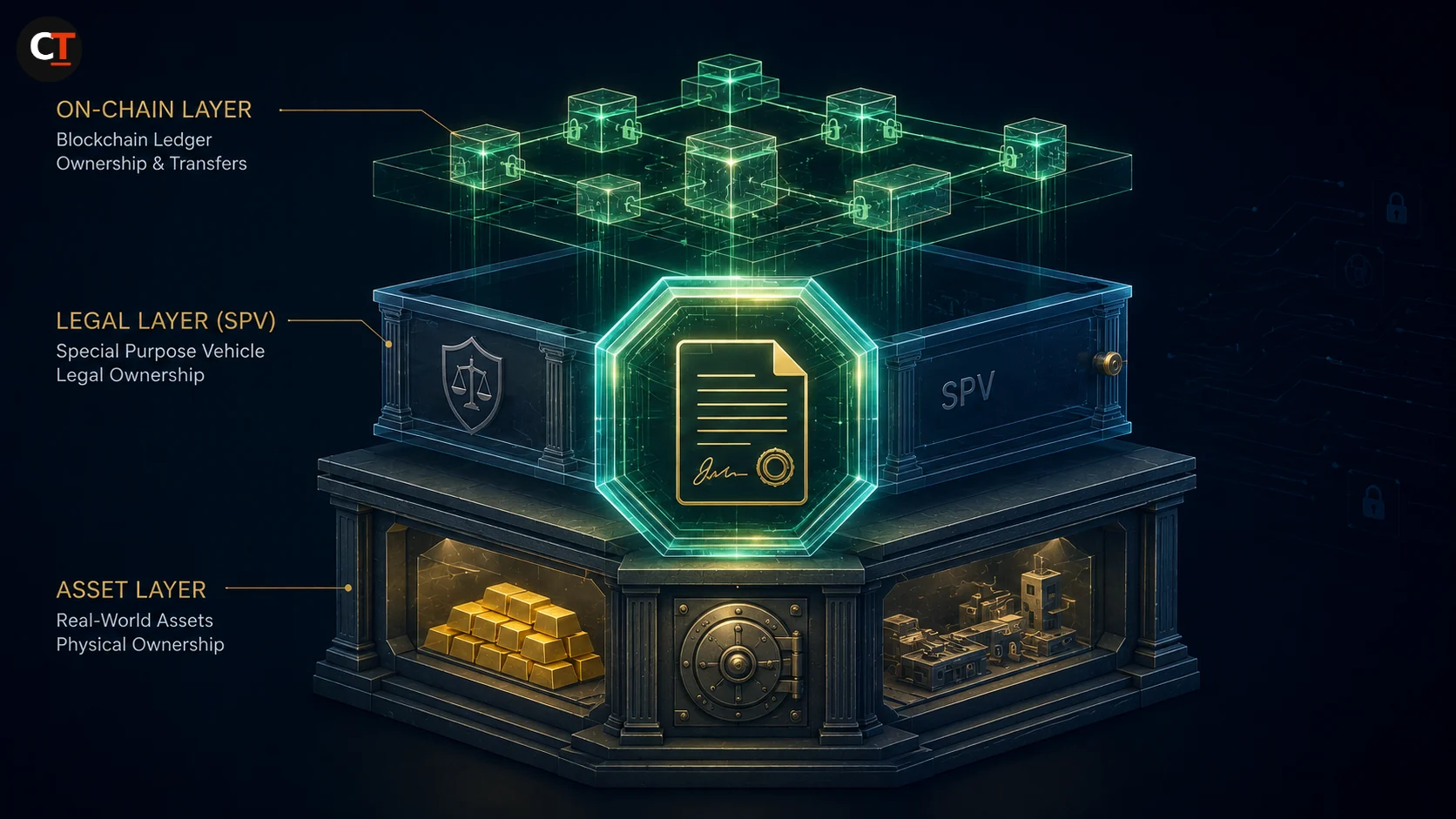
The 3-Layer Legal Bridge: How Tokenized Ownership Actually Works
When an institution tokenizes a real-world asset, they do not upload the physical property onto a blockchain. They create a multi-layer corporate holding structure.
| Layer | Component | What It Does in the Real World |
|---|---|---|
| Layer 1: The Physical Asset | Real Estate, T-Bills, Private Debt | The actual underlying source of value (land in Bengaluru, US Treasury bonds in a custodian bank, corporate loans). |
| Layer 2: The Legal Wrapper | Special Purpose Vehicle (SPV) / Trust | A dedicated legal entity (Private Limited Company, LLC, or Statutory Trust) registered in a recognized jurisdiction that holds legal title to Layer 1. |
| Layer 3: The Digital Token | Smart Contract on Blockchain | A digital certificate representing shares, membership interests, or debt obligations of Layer 2. |
Notice the chain of custody.
You do not own the building in Layer 1. You own a digital token in Layer 3. That token represents a legally enforceable share of the SPV in Layer 2. The SPV in Layer 2 holds the registered title to the building in Layer 1.
If the legal connection between Layer 3 and Layer 2 is poorly written, your digital token is just meaningless numbers on a distributed ledger.
What Is an SPV, and Why Is It Necessary?
A Special Purpose Vehicle (SPV) is a separate legal entity created for a single, isolated financial purpose.
Why not have the tokenization company own the asset directly on its main corporate balance sheet?
Because of liability.
If a startup called PropTech Inc. owns five tokenized buildings on its main corporate balance sheet and gets sued by a former employee or defaults on corporate debt, bankruptcy courts could seize all five buildings to pay off general creditors. Investors who bought building tokens would lose everything.
To prevent this, attorneys use a concept called bankruptcy-remoteness.
An SPV is legally ring-fenced. It has no employees, takes on no unrelated corporate debt, and exists solely to hold one specific asset. If the platform that launched the token goes bankrupt, the SPV remains untouched. Token holders retain their full claim on the underlying asset.
This is not a new crypto invention. Traditional finance has used SPVs for decades in asset-backed securitization, mortgage-backed securities, and real estate investment trusts (REITs). Tokenization simply digitizes the ownership ledger of that SPV.
Two Very Different Animals: Asset Ownership vs. Synthetic Exposure
As the market for on-chain assets expands, investors will encounter two distinct token structures. Conflating them is dangerous.
BlackRock’s Chief Investment Officer of ETF and Index Investments, Samara Cohen, highlighted this exact dividing line: Tokenized Ownership versus Tokenized Price Representations (TPRs).
1. Tokenized Ownership (Asset-Backed)
In an ownership structure, the token is recognized under corporate law as the official shareholder register or membership registry of the SPV.
- Direct Legal Claim: You have a beneficial property right. If the property sells, you are entitled to net liquidation proceeds by law.
- Pass-Through Yield: Rents, interest, and dividends flow directly through the smart contract to your wallet.
- Corporate Governance: Where applicable, token holders vote on key decisions (such as property management changes or major asset sales).
2. Tokenized Price Representations (Synthetic TPRs)
In a synthetic structure, you do not own the asset, nor do you own an SPV holding the asset. You hold a derivative contract issued by a third party designed to track the reference asset’s price.
- No Underlying Claim: You have no rights to physical assets or corporate registers.
- 100% Counterparty Risk: Your investment depends entirely on the issuer’s financial solvency. If the issuer collapses, your token becomes worthless.
- Price Deviations: TPRs frequently diverge from the real asset’s price during volatile trading hours or weekend market closures.
Always verify whether a token confers direct beneficial ownership via a ring-fenced SPV or merely provides synthetic economic exposure issued by an intermediary.
Asset Classes Compared: How Legal Wrappers Differ
The legal complexity of a tokenized asset depends on what sits inside the vault.
| Asset Class | Typical Legal Structure | Enforceability Complexity | Real-World Dependency |
|---|---|---|---|
| US Treasuries & Cash | Regulated 1940-Act Fund / Offshore Trust | Low | Qualified custodian bank holding sovereign debt. Highly automated. |
| Private Credit / Loans | Securitization SPV / Lending Trust | Medium | Loan servicing agency to collect payments and handle borrower defaults. |
| Commercial Real Estate | Property-Specific LLC or Private Limited SPV | High | Property management firm, physical maintenance, tenant contracts, local municipal laws. |
| Fine Art & Collectibles | Custodial Bailment Trust / Free-Port Vault SPV | Very High | Physical insurance, climate-controlled vaulting, physical authentication audits. |
Notice the difference between tokenized US Treasuries (like BlackRock’s BUIDL or Franklin Templeton’s FOBXX) and tokenized real estate.
A tokenized treasury fund holds standard government bills in a regulated institutional custodian account. The interest is paid in cash by the US government. There are no tenants, no plumbing leaks, and no property tax disputes.
Real estate tokens, by contrast, are deeply entangled with local physical reality. The token is only as good as the property manager collecting rent and paying municipal taxes.
The 5 Questions Every Investor Must Ask Before Buying
Before putting capital into any tokenized asset, look past the slick website UI and check the legal disclosures. Here are the five questions that matter:
1. Which legal entity owns the asset, and where is it registered?
If the issuer cannot provide the name, registration number, and jurisdiction (e.g., Delaware LLC, Cayman Foundation, GIFT City entity) of the SPV, walk away.
2. Is the SPV bankruptcy-remote from the platform?
Verify that the asset is held in an isolated structure that cannot be liquidated if the software developer or issuer goes bust.
3. Who serves as the independent custodian or trustee?
Institutional-grade tokenized funds use recognized third-party custodians (such as BNY Mellon, State Street, or licensed trust companies) to hold collateral, not unregulated startup wallets.
4. Does the token grant legal ownership or synthetic exposure?
Confirm whether you are getting a legally enforceable membership unit or an uncollateralized price tracker.
5. What is the dispute resolution venue?
If a legal conflict arises, which jurisdiction’s courts have authority? A smart contract cannot resolve a commercial contract breach; a court must.
What Happens When the SPV Fails: A Real-World Warning
In 2023, several early-stage tokenized real estate platforms operating in the US and Southeast Asia suspended redemptions after failing to secure Series B funding. The platforms’ operational teams dissolved, but the SPVs holding the underlying properties remained legally intact.
What happened next separated well-structured deals from poorly structured ones.
In platforms with proper bankruptcy-remote SPVs, token holders retained their equity claims. Independent trustees stepped in, managed the properties, and arranged orderly asset sales over 12 to 18 months. Investors recovered between 65% and 90% of their original capital.
In platforms without true SPV isolation (where the property was held on the founding company’s balance sheet), investors became unsecured creditors in general bankruptcy proceedings. After legal fees and senior creditor priority claims, recovery rates were under 10%.
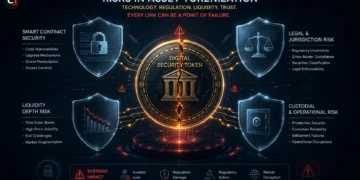
The difference was not the token. The difference was the legal structure underneath. This is precisely why the real risks of tokenized assets go far beyond smart contract code.
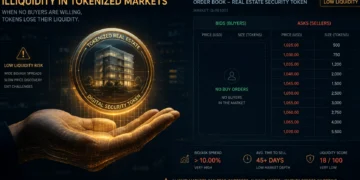
It also explains why secondary market liquidity for RWA tokens collapses fastest when platform risk emerges: buyers refuse to bid on tokens backed by questionable legal structures, even when the underlying property has genuine value.
The Bottom Line
Tokenization is a genuine breakthrough in financial engineering. It turns static, illiquid assets into divisible, programmable, globally accessible digital units.
Yet technology does not replace the rule of law. It operates on top of it.
A token is not an island. It is a digital handle attached to a legal entity. When you evaluate an on-chain asset, do not just audit the smart contract code. Audit the legal structure underneath. That is where your ownership actually lives.
This article is part of a complete educational series on real-world asset tokenization:
- What Is Asset Tokenization? The Real Explanation (2026)
- How Financial Markets Evolved: From Paper to ETFs to Tokens
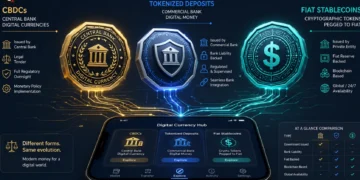
- Stablecoins vs. Tokenized Deposits vs. Digital Rupee
- Tokenized US Treasuries: On-Chain Yield Guide
- The Tokenization Liquidity Myth: Can You Sell RWA Tokens?
- Tokenization in India 2026: SEBI, RBI and the New Law
- The Real Risks of Tokenized Assets Nobody Talks About